
English 


Views: 0 Author: Site Editor Publish Time: 2026-07-05 Origin: Site


Modern cold storage facilities face increasing pressure from rising energy costs, stricter building fire codes, and demand for rapid facility commissioning. Because energy grids constantly fluctuate, minimizing thermal loss remains your ultimate operational priority. Facility owners and engineers must choose carefully between traditional EPS, standard PUR, and advanced PIR panels. They weigh upfront material constraints against long-term operational efficiency and mandatory safety compliance. Making an incorrect insulation choice often leads to massive energy leaks or failed municipal safety inspections.
We provide an objective, engineering-focused evaluation of Polyisocyanurate materials. You will discover whether their specific thermal and fire-retardant properties genuinely justify their deployment in demanding industrial cold rooms. This comprehensive guide details everything from basic chemical advantages to precise temperature-to-thickness sizing protocols. You will learn exactly how to protect your assets while optimizing daily refrigeration cycles.
Thermal Efficiency: PIR panels offer a highly stable thermal conductivity (λ-value), significantly reducing refrigeration energy loads compared to legacy EPS.
Risk Mitigation: Specifying fireproof PIR sandwich panels is often critical for meeting stringent commercial insurance requirements and local building codes.
Thickness dictates Application: Panel thickness must be strictly aligned with target temperature zones (e.g., 100mm for standard chillers, up to 200mm+ for deep-freeze environments).
Installation Sensitivity: The theoretical performance of PIR relies heavily on proper joint interlocking and thermal bridge mitigation during construction.
Refrigeration energy loss heavily drives rising operational expenditures in modern cold storage. Compressors run longer when basic insulation fails. This constant running spikes electricity usage dramatically. Engineers must halt this thermal leakage immediately. The insulation core material directly dictates this efficiency level. We must evaluate traditional EPS and PUR against modern alternatives.
Let us examine the chemical differences closely. Polyisocyanurate features a heavily cross-linked ring structure. This molecular density provides superior thermal stability. It also delivers high dimensional rigidity compared to standard Polyurethane (PUR). PUR often degrades faster under extreme temperature swings. EPS (Expanded Polystyrene) poses even greater risks to your facility. EPS absorbs moisture over time rapidly. Water intrusion destroys insulation value entirely. EPS also possesses much lower compressive strength. Therefore, engineers consider PIR Sandwich Panels the true industrial-grade upgrade.
Evaluating performance means looking at specific return metrics. First, you should expect a solid reduction in compressor duty cycles. Better insulation keeps room temperatures stable much longer. Second, you extend the overall facility lifespan significantly. These structural panels resist degradation effectively over decades. Finally, you gain more usable interior space. Thinner PIR walls achieve the exact same target U-values as bulky EPS walls. You maximize your active storage footprint effortlessly.
Material Type | Thermal Stability | Moisture Resistance | Compressive Strength |
|---|---|---|---|
EPS (Expanded Polystyrene) | Low | Poor | Low |
PUR (Standard Polyurethane) | Moderate | Good | Moderate |
PIR (Polyisocyanurate) | High | Excellent | High |
Fire risk remains a primary liability in cold room facilities. Conventional insulating foams often act as dangerous accelerants during fires. They melt rapidly and spread flames everywhere. However, PIR behaves entirely differently under high heat. It relies on a highly unique chemical charring mechanism.
When exposed to intense heat, PIR forms a protective surface char. This carbonized layer actively starves the underlying flame of oxygen. It stops the fire from spreading deeper into the core. Furthermore, the material does not melt or drip. Dripping molten plastic causes secondary fires in traditional storage structures. The robust char formation prevents this catastrophic failure completely.
Do not accept vague "fire-resistant" claims blindly from vendors. You must verify actual testing data personally. Look for specific, globally recognized certifications. Reliable standards include FM Approvals, EN 13501-1, and ASTM E84 testing protocols. For example, passing the FM 4880 standard proves the panel will not contribute to a runaway facility fire. These tests confirm the exact reaction to severe fire.
Integrating certified fireproof PIR sandwich panels drastically alters facility compliance. Commercial insurance providers often lower premiums for highly rated materials. Facility compliance audits become much smoother. Auditors look specifically for these documented fire ratings. Missing these critical certifications can pause your daily operations indefinitely.
Accepting standard PUR as an equal fire-safe alternative.
Ignoring local building code updates regarding core materials.
Failing to keep certification documents on site for auditors.
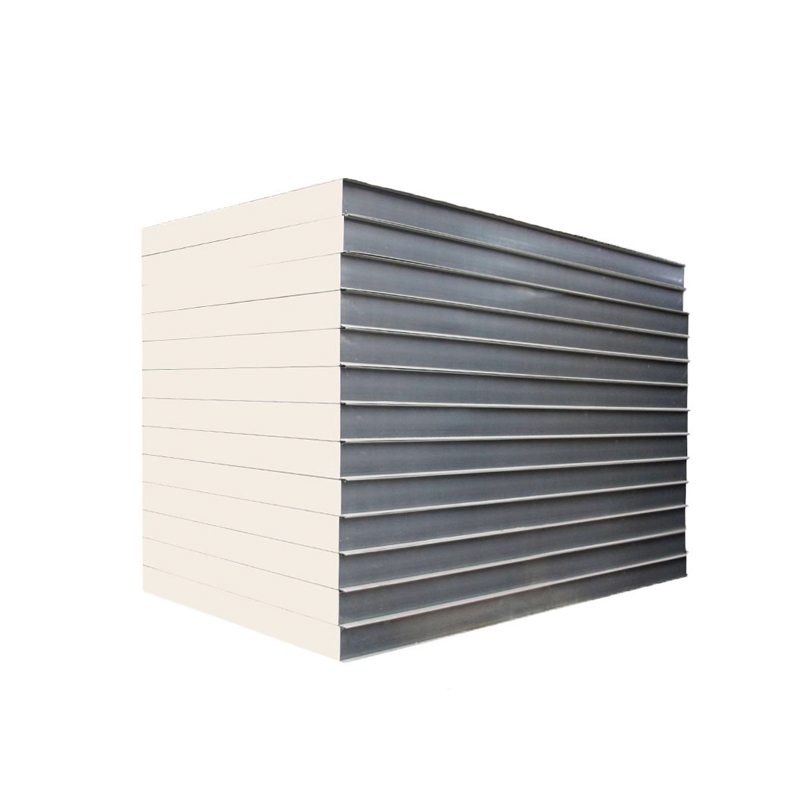
Selecting the correct thickness is highly critical. You must apply objective sizing logic constantly. Over-engineering wastes valuable upfront capital immediately. You end up paying for entirely unnecessary material. Under-engineering leads to severe long-term problems. It causes external condensation and constant energy loss. You must match the insulation directly to your targeted cooling demands.
Follow this standardized thickness guide for general industry benchmarks:
Positive Temperature Rooms (+0°C to +8°C): Use 50mm to 80mm panels. These handle standard chiller operations very efficiently.
Standard Freezers (-18°C to -25°C): Select 100mm to 150mm panels. Deep freezing requires substantial thermal bridging defense.
Blast Freezers (-35°C to -40°C): Deploy 150mm to 200mm (or thicker) panels. Extreme rapid freezing demands maximum thermal resistance to prevent equipment burnout.
Base requirements often alter due to external variable factors. You must consider external ambient temperatures carefully. Hotter climates demand thicker insulation baselines naturally. Solar load matters significantly too. If your panels form the external building envelope, the sun hits them directly. This harsh exposure drastically increases the thermal load. Finally, evaluate your daily product throughput. High volumes of warm goods entering the room require much more robust insulation buffers.
PIR panels serve as more than just basic insulation. They act as robust structural components within the facility. You must evaluate the metal facing carefully. Pre-painted galvanized iron (PPGI) works well for dry storage environments. However, food processing often demands frequent chemical washdowns. Stainless steel facings provide better hygiene compliance under harsh daily cleaning protocols.
Addressing cold room floors requires highly specialized planning. You must insulate the floor to handle heavy forklift traffic. You also need to prevent dangerous frost heave beneath the slab. Frost heave cracks concrete and destroys building foundations entirely. Heavy pallet jacks exert massive point loads on floors.
Engineers often debate floor insulation methods. Sometimes, specialized high-density PIR floor panels work best. They install quickly and handle moderate loads safely. Alternatively, heavy industrial facilities use traditional poured concrete over dense foam boards. Reinforced concrete handles massive steel pallet racks securely.
Installation pitfalls frequently ruin good panel designs. We see major differences between common joining mechanisms. Cam-lock systems pull panels together very tightly. Slip-joint mechanisms require more precise manual alignment on site. Both need meticulous attention from the construction crew.
Vapor barrier integrity remains absolutely critical. You must apply precise sealants at all corner nodes. Panel joints also require continuous sealant beads. Failing here allows interstitial condensation. Moisture gets trapped inside the joint quickly. It freezes, expands violently, and destroys the panel structure from within.
Selecting a competent supplier dictates your project outcome. You must evaluate their manufacturing tolerances closely. Ask about their exact production line style. Continuous line production ensures highly consistent core density. Discontinuous pressing often leads to irregular panel strength. It also drastically increases the long-term risk of layer delamination.
Demand absolute data transparency from potential partners. Watch out for clear red flags during negotiations. Beware of suppliers unwilling to provide core density data. They might use inferior chemical mixes secretly. Always request official fire test certificates upfront. Furthermore, verify the exact facing steel gauges. Thinner steel dents easily during normal daily operations.
Delivery logistics require careful advance planning. Factoring in the logistical footprint is quite crucial. Large-span continuous panels require specialized flatbed transport. This transport alters your total shipping distances and budgets. Site-handling also becomes increasingly complex. Long panels often require vacuum lifting equipment. Ensure your site can accommodate these delivery requirements safely.
Request physical panel samples before signing any contracts.
Verify third-party testing reports directly with the issuing laboratory.
Confirm warranty terms regarding thermal performance degradation over time.
Polyisocyanurate materials represent a significant structural upgrade over legacy foams. We conclude that PIR sandwich panels remain highly effective for modern cold room construction. They perform brilliantly provided the specific formulation meets necessary fire standards. The core density must also align perfectly with your exact thermal requirements to prevent operational loss.
You should take immediate action to secure your facility. First, calculate your specific U-value targets directly. Base these exact numbers on your actual refrigeration equipment capacity. Next, demand certified technical data sheets (TDS) from every vendor. You must secure this validated data before issuing any formal Request for Quote (RFQ). Proper preparation ensures long-term operational success.
A: No material is truly invincible to fire. "Fireproof" is an industry shorthand. Scientifically, PIR panels are highly fire-retardant and self-extinguishing. They formulate a protective char that starves flames of oxygen. This prevents melting, dripping, and rapid fire spread. They buy critical time during emergencies but will eventually degrade under sustained, extreme infernos.
A: A high-quality PIR panel easily lasts 25 to 30 years. This lifespan depends heavily on proper initial installation. You must maintain complete vapor barrier integrity. You also need to avoid severe physical damage from forklifts. Regular maintenance of the joint sealants ensures the core remains dry and thermally stable.
A: Yes, they function exceptionally well in both roles. Dual-purpose architectural PIR panels feature thicker exterior steel gauges and weather-resistant coatings. They withstand wind loads, rain, and direct sun. Internal partition panels focus purely on hygiene facings and thermal separation. Always specify the correct panel type for its designated environment.


