
English 


Views: 0 Author: Site Editor Publish Time: 2026-09-09 Origin: Site


Did you know that a seemingly minor ambient temperature shift can irreversibly ruin an entire multi-million dollar vaccine batch? For modern facility managers and industrial engineers, the daily struggle to maintain strict climate parameters while battling soaring energy costs is a relentless challenge. In highly regulated sectors, the margin for thermal error is precisely zero.
Looking at recent market shifts, there is a massive industry-wide pivot toward net-zero and highly sustainable cold storage facilities. Regulatory pressures regarding environmental goals, combined with surging global electricity rates, are forcing plant operators to abandon outdated insulation. The market now demands high-performance architectural envelopes that integrate seamlessly with smart HVAC systems.
To navigate these complex operational demands, industry leaders are moving away from traditional building materials. In this comprehensive guide, you will discover how upgrading to an advanced architectural envelope can permanently solve these vulnerabilities. Specifically, we will explore how high-performance insulation technologies stabilize your temperature control system, drastically reduce overhead costs, and ensure absolute compliance with global health standards.
Unmatched Thermal Efficiency: Polyisocyanurate technology provides exceptionally low thermal conductivity. It creates an airtight seal that slashes the energy required to operate heavy-duty refrigeration units.
Strict Regulatory Compliance: Engineered with seamless, non-porous metal facings, these composite structures effortlessly meet rigorous FDA, USDA, and GMP hygiene standards required for sensitive manufacturing environments.
Enhanced Fire Safety: Unlike legacy insulation foams, this material boasts a unique cross-linked chemical matrix that chars rather than melts. This delivers critical fire-retardant properties to protect high-value assets.
Rapid Installation: Precision-milled interlocking joint systems guarantee expedited assembly and zero thermal bridging. This minimizes operational downtime during new construction or facility retrofits.
Long-Term ROI: The powerful combination of reduced power consumption, virtually zero maintenance, and a lifecycle exceeding 25 years makes this material a highly lucrative investment for any industrial operation.
For procurement directors and construction planners, understanding the fundamental material science behind building components is the first step toward making informed, future-proof investment decisions. It is not merely about buying walls. It is about engineering a protective microclimate.
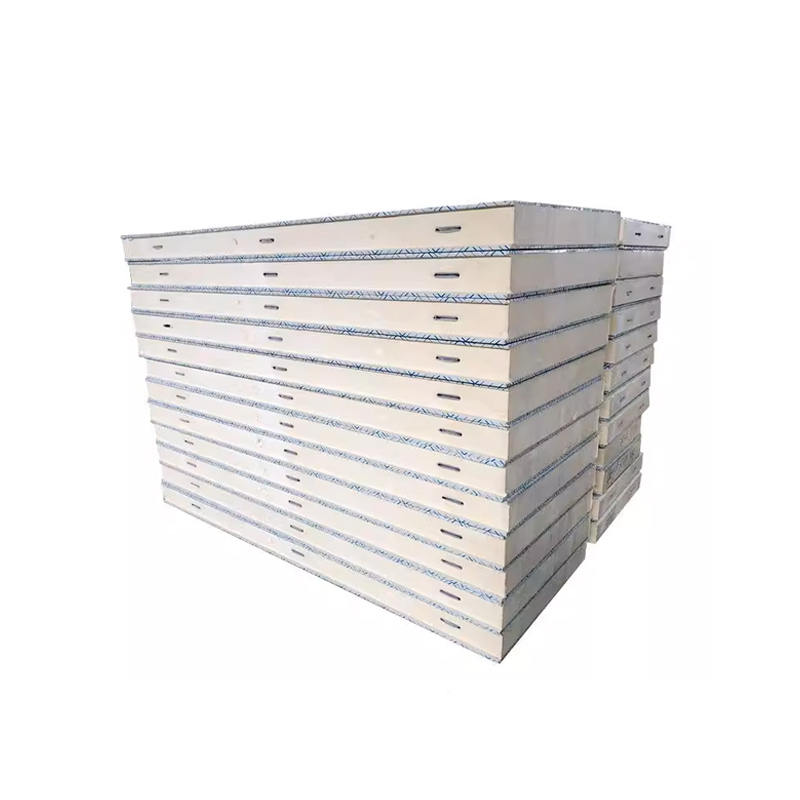
A PIR sandwich panel is an advanced composite building material explicitly engineered for high-performance thermal resistance. The structural core consists of Polyisocyanurate, a rigid thermoset plastic produced by reacting an isocyanate with a polyol in the presence of specialized catalysts and blowing agents.
What truly distinguishes this material from standard commercial foams is its highly cross-linked, ring-like chemical structure, known as isocyanurate rings. This dense, closed-cell architecture typically boasts a core density of 40 to 42 kilograms per cubic meter. It traps low-conductivity gases permanently within the foam matrix, effectively halting heat transfer at a molecular level. Furthermore, this rigid foam core is permanently bonded under immense pressure between two durable exterior facings. Depending on the specific environmental demands, these outer skins are typically fabricated from pre-painted galvanized steel, marine-grade stainless steel, or lightweight aluminum. The metal provides the necessary structural integrity, impact resistance, and an impenetrable barrier against external moisture.
When designing a climate-controlled warehouse, structural engineers typically evaluate three primary foam insulations: Expanded Polystyrene, Polyurethane, and Polyisocyanurate. While all three function as insulating barriers, their real-world performance metrics vary drastically.
Expanded Polystyrene is highly susceptible to moisture absorption and melts rapidly under fire conditions, making it increasingly obsolete in modern industrial builds. Polyurethane offers excellent insulation but still poses moderate combustion risks. In contrast, Polyisocyanurate is universally recognized as the superior upgrade. It possesses a lower thermal conductivity, typically around 0.022 Watts per meter-Kelvin, meaning significantly thinner walls can achieve the exact same insulation value as bulky polystyrene blocks.
To clearly illustrate these engineering differences, consider the following performance comparison:
Performance Metric | Expanded Polystyrene | Polyurethane | Polyisocyanurate |
|---|---|---|---|
Thermal Conductivity | 0.036 - 0.040 W/m·K | 0.024 - 0.028 W/m·K | 0.018 - 0.022 W/m·K |
Fire Resistance | Poor - Melts rapidly | Moderate - Combustible | Excellent - Chars, B1 Fire-Rated |
Moisture Absorption | High | Low | Virtually Zero - Closed Cell |
Compressive Strength | Low | High | Very High |
Insulation is far more than an architectural preference. It is the foundational element that dictates whether an industrial plant can legally and safely operate. Before diving into technical specifications, one must grasp the severe operational stakes involved.
In the global food and beverage sector, maintaining precise thermal parameters is a direct matter of public health. Imagine a sprawling meat packing plant. It rarely operates at a single uniform temperature. Instead, modern processing requires distinct, rigidly controlled thermal zones. You have blast freezers plunging to negative 40 degrees Celsius for rapid freezing, holding freezers steady at negative 18 degrees Celsius, and active processing halls maintained at a brisk 10 degrees Celsius to keep workers comfortable while actively suppressing bacterial proliferation.
If the building envelope fails, disaster follows quickly. Heat infiltrates the food processing cold room, triggering thermal bridging and forcing refrigeration units into overdrive. Even a minor ambient fluctuation can accelerate the growth of lethal pathogens like Listeria or Salmonella. The fallout includes catastrophic food spoilage, massive product recalls, and crippling regulatory fines. A highly insulated, airtight envelope stabilizes this internal climate, ensuring that perishable goods remain safely within their required thresholds from the loading dock to the delivery truck.
The pharmaceutical industry operates under even tighter, virtually unforgiving tolerances. Biopharmaceuticals, live-virus vaccines, blood plasma, and active pharmaceutical ingredients are extraordinarily thermosensitive. A dedicated pharmaceutical cold storage facility must typically guarantee an unbroken temperature range of 2 to 8 degrees Celsius. Meanwhile, ultra-low temperature storage for specialized mRNA therapeutics often demands environments as frigid as negative 70 degrees Celsius.
Thermal deviations in these sterile environments do not merely cause spoilage. They fundamentally alter the molecular efficacy of life-saving drugs. Regulatory bodies mandate continuous, digitized temperature mapping. Any structural weakness that allows ambient heat to breach the cleanroom can trigger automated alarms, resulting in the immediate quarantine and subsequent destruction of millions of dollars worth of inventory. Therefore, absolute thermal reliability is not a luxury. It is a strict baseline requirement.
The rapid adoption of this technology across industrial construction is driven by distinct, measurable engineering advantages. These benefits directly neutralize the inherent vulnerabilities found in traditional building materials, establishing them as the ultimate cold chain solution.
The core metric of any insulation is its ability to resist conductive heat flow, universally measured by its R-value. Polyisocyanurate composites possess one of the highest R-values per inch of any commercially viable building material on the market. Because the closed-cell matrix encapsulates trapped insulating gases, thermal transfer is severely restricted.
Building upon these thermal properties, the chilled air generated by the HVAC system remains locked inside, while scorching exterior heat is aggressively repelled. Consequently, the facility heavy-duty refrigeration compressors do not need to cycle on as frequently to maintain the setpoint. This unwavering thermal stability prevents localized warm spots and ensures uniform cooling throughout the entire storage volume.
Fire safety remains a paramount compliance metric for insurance underwriters assessing industrial risk. Traditional polystyrene panels act as a dangerous accelerant during a fire, melting rapidly and raining down burning droplets. Polyurethane performs slightly better but still presents significant combustion hazards.
Conversely, premium panels are engineered to meet B1 fire-rated standards. They possess a high index of isocyanate, fundamentally altering their reaction to extreme heat. When exposed to a direct flame, the surface of the foam undergoes a chemical transformation known as charring. It rapidly forms a protective, carbonaceous crust that insulates the deeper layers of foam, effectively starving the fire of fuel, delaying its spread, and preventing structural collapse. This charring effect buys crucial evacuation time for personnel and shields high-value machinery until automated fire suppression systems can deploy.
Moisture is the absolute enemy of thermal efficiency. If water vapor manages to penetrate an insulation material, it displaces the insulating gases, drastically and permanently lowering the R-value. Furthermore, in sub-zero environments, this trapped moisture freezes, expands, and causes devastating structural delamination.
Advanced closed-cell structures mitigate this risk entirely. The foam matrix itself boasts a water absorption rate of less than 2 percent by volume. When paired with impermeable exterior metal facings, the entire wall acts as a continuous, unbroken vapor barrier. This eliminates condensation formation on the walls, which is a critical factor in preventing mold, mildew, and fungal growth inside sterile cleanrooms and processing halls.
In highly regulated industries, the physical building must be as pristine as the products being manufactured within it. The walls and ceilings are subjected to intense, daily scrutiny from internal quality assurance teams and external health inspectors.
Traditional construction materials, such as poured concrete or painted drywall, are inherently porous. They harbor microscopic bacteria and are nearly impossible to sterilize completely. In stark contrast, composite panels are manufactured with perfectly smooth, non-porous metal surfaces that offer no refuge for microbes.
To further align with Good Manufacturing Practice guidelines, these metal skins are often treated with specialized, food-safe laminates like Polyvinyl Chloride or Polyvinylidene Fluoride. These advanced protective layers reduce the surface tension of the wall, making it exceedingly difficult for organic matter, sticky biofilms, or bacterial colonies to adhere. When the interlocking joints are sealed with food-grade silicone, it creates a flush, monolithic surface devoid of crevices where contaminants typically hide.
Picture the daily sanitation protocol in an active meat processing plant. Maintenance crews execute aggressive washdowns utilizing high-pressure hot water hoses, caustic foaming detergents, and harsh sanitizers containing heavy chlorine or quaternary ammonium compounds.
Standard building materials quickly degrade, rust, or corrode under this relentless chemical assault. However, premium panels faced with 304 or 316-grade stainless steel are chemically inert to standard industrial cleaning agents. They are engineered to endure decades of high-pressure washdowns without peeling, blistering, or compromising their structural load-bearing capacity, ensuring permanent compliance with sanitation regulations.
While the initial capital expenditure is always a primary consideration for project managers, the Total Cost of Ownership reveals the true financial value of a building material. From a financial perspective, investing in premium insulation delivers substantial, compounding returns over the lifecycle of the facility.
Refrigeration and HVAC systems account for the overwhelming majority of electricity consumption in cold storage operations. When a facility is constructed with substandard or degrading insulation, the refrigeration plant must run almost continuously to compensate for the constant thermal leakage.
By installing a highly airtight panel system, the thermodynamic latent heat load on the compressors and evaporators drops dramatically. Engineering models consistently prove that upgrading from standard insulation to high-density closed-cell foam can reduce energy consumption by up to 30 percent. Lower compressor run times not only slash monthly utility bills but significantly extend the mechanical lifespan of the expensive refrigeration equipment, delaying costly replacements.
Industrial environments are physically brutal. Forklift impacts, pallet scraping, and constant thermal cycling take a heavy toll on facility infrastructure. Composite panels offer exceptional shear strength and load-bearing capacity due to the intense chemical adhesion between the metal facings and the rigid foam core.
Unlike traditional fiberglass or blown-in cellulose insulation, rigid foam does not sag, settle, or degrade over time. It is entirely impervious to rodents, nesting insects, and rot. A properly installed system boasts an expected operational lifespan of 25 to 40 years with minimal routine maintenance. This incredible durability ensures that the facility avoids costly structural retrofits and the associated operational downtime.
In commercial construction, time is inextricably tied to capital. Extended construction schedules delay production launches, postponing crucial revenue generation. Modular insulation systems are specifically designed to accelerate the entire building process.
These panels are prefabricated in highly controlled factory environments to exact dimensional tolerances. The edges of each insulated enclosure panel feature sophisticated interlocking profiles, most commonly precision-milled tongue-and-groove or internal cam-lock mechanisms.
During on-site installation, these engineered edges slide together seamlessly. This mechanical interlock serves two critical purposes. First, it aligns the walls perfectly for superior structural rigidity. Second, it creates a complex labyrinth seal that entirely eliminates thermal bridging at the joints. When properly sealed with specialized vapor-proof mastics or butyl tapes, the joint system guarantees that absolutely no ambient air can penetrate the refrigerated envelope.
Traditional multi-layer construction requires coordinating multiple trades, including framing crews, insulation installers, vapor barrier specialists, and interior finishers. This sequential, labor-intensive process is notoriously slow and weather-dependent.
In contrast, insulated metal panels represent a single-component solution. They provide the exterior weather facade, the structural insulation, the vapor barrier, and the hygienic interior finish in one swift step. Because the panels are surprisingly lightweight relative to their size, they can be maneuvered and erected rapidly using standard lifting equipment. This modular approach can slash construction timelines by up to 50 percent, allowing pharmaceutical companies and food distributors to commission their facilities and commence revenue-generating operations months ahead of schedule.
Procuring the correct panel specification requires meticulously matching the material properties to the exact operational demands of your specific site. A generic, one-size-fits-all approach inevitably leads to either inadequate thermal protection or wasted capital expenditure.
The required thickness of the panel is directly dictated by the target internal temperature and the maximum external ambient climate of your geographic location. Insufficient thickness leads to surface condensation and overworked compressors, while over-specifying thickness unnecessarily inflates the construction budget.
As a practical engineering baseline, match your facility needs to these standard specifications:
Processing Halls and Loading Docks 10 to 15 degrees Celsius: 50mm to 75mm thickness.
Standard Chillers and Pharma Storage 2 to 8 degrees Celsius: 75mm to 100mm thickness.
Commercial Holding Freezers negative 18 degrees Celsius: 120mm to 150mm thickness.
Deep Blast Freezers negative 35 to negative 40 degrees Celsius: 150mm to 200mm thickness.
Always consult a thermal engineer to calculate the precise U-value required for your project.
The daily activities inside the facility should dictate your choice of metal facing. Pre-Painted Galvanized Iron is the industry standard for general dry cold storage. It is cost-effective, highly durable, and perfectly suitable for environments without aggressive chemical cleaning.
However, for harsh pharmaceutical cleanrooms and active meat processing plants, Stainless Steel is absolutely mandatory. It offers maximum resistance to blood, organic acids, and high-pressure chemical washdowns. Alternatively, aluminum facings are often utilized in specialized applications where overall building weight reduction is a primary engineering concern.
Maintaining a flawless, unbroken thermal environment is non-negotiable for modern food and pharmaceutical operations. The risks of product spoilage, regulatory fines, and public health hazards are simply too great to rely on outdated construction methods.
Advanced composite sandwich panels represent the pinnacle of modern insulation technology, ensuring facilities remain safe, hygienic, and incredibly energy-efficient. By creating an impenetrable thermal envelope, these systems protect sensitive inventory while drastically reducing the daily operational strain on refrigeration equipment.
Investing in premium insulation upfront consistently pays massive dividends through ongoing energy savings, reduced maintenance, and unshakeable regulatory compliance. Evaluate your current facility thermal vulnerabilities today, and consult with industry specialists to design a customized panel system that will protect your operations for decades to come. Ready to upgrade your facility envelope? Visit https://www.greenlvgreen.com to explore our full range of B1 fire-rated panels and discover the perfect custom cold storage solution for your next project.
Yes, they are universally approved for use in FDA and USDA-regulated facilities, provided they are specified with the correct surface materials. The internal insulating foam is fully encapsulated by metal facings, meaning the insulation itself never contacts the food. To meet stringent sanitary design requirements, the internal metal skins must utilize food-grade coatings, such as specialized PVDF paints, PVC laminates, or high-grade stainless steel. These smooth, non-porous surfaces prevent bacterial adhesion and easily withstand the rigorous daily washdowns demanded by food safety inspectors.
While both are rigid foam insulations, their chemical compositions differ significantly, affecting their performance in high-stakes environments. Polyisocyanurate contains a higher ratio of methylene diphenyl diisocyanate and is manufactured at much higher temperatures. This creates a highly cross-linked chemical structure that provides superior thermal stability and exceptional fire resistance. In the event of a fire, it chars rather than melting and dripping like Polyurethane. For pharmaceutical storage housing high-value inventory, insurance companies frequently mandate the charring properties due to this enhanced fire-retardant capability.
When engineered, manufactured, and installed correctly, these advanced composite panels offer an exceptionally long service life, typically ranging from 25 to 40 years. Unlike traditional open-cell insulation materials that degrade, sag, or lose their R-value due to moisture absorption over time, the closed-cell structure remains dimensionally stable. The longevity of the panel is ultimately determined by the durability of the metal facings and the integrity of the joint seals. Routine maintenance, such as inspecting silicone seals and preventing mechanical damage from forklifts, ensures the panels maintain their integrity for decades.
Absolutely. Blast freezers require rapid temperature drops and sustained extreme cold, often reaching negative 35 to negative 40 degrees Celsius. High-density closed-cell panels are the ideal material for these brutal environments due to their incredibly low thermal conductivity. For blast freezer applications, engineers typically specify panels with a thickness between 150mm and 200mm. This extreme thickness prevents heat ingress and entirely eliminates the risk of external surface condensation. Furthermore, the specialized interlocking joint systems prevent the transfer of extreme cold to the outer metal skins, maintaining the structural stability of the freezing chamber.
These panels drastically improve mechanical efficiency by creating a near-perfect airtight and thermally resistant building envelope. In a poorly insulated facility, refrigeration units must constantly battle against heat leaking in from the outside environment. High-performance panels halt this thermal transmission. Consequently, the refrigeration compressors do not have to work as hard or run as frequently to maintain the target setpoint. This stabilization of internal temperatures prevents harmful thermal fluctuations, protects sensitive inventory, reduces wear and tear on HVAC equipment, and significantly lowers overall facility energy consumption.
High-quality panels are engineered to achieve a B1 fire rating, classifying them as highly flame retardant. Unlike standard polystyrene that melts and acts as a fire accelerant, the unique chemical composition of the isocyanurate core causes it to char upon exposure to direct flame. This carbonized crust forms a protective barrier that prevents the fire from penetrating deeper into the foam matrix, effectively halting the spread of flames and providing critical time for fire suppression systems to activate.
Upgrading from standard Expanded Polystyrene to high-density Polyisocyanurate can reduce facility cooling energy consumption by up to 30 percent. Because the thermal conductivity is significantly lower, less ambient heat penetrates the building envelope. This dramatically decreases the latent heat load on your refrigeration compressors. Reduced compressor run times directly translate to lower monthly utility bills and extended lifespans for expensive HVAC mechanical components.


