
English 


Views: 0 Author: Site Editor Publish Time: 2026-09-16 Origin: Site


Did you know refrigeration drives the vast majority of operational costs in logistics facilities? Imagine running a massive distribution center where compressors are constantly fighting a losing battle against ambient heat. As global energy prices continuously climb, minimizing thermal leaks has shifted from a best practice to a critical survival strategy. Rising utility bills make every compromised structural joint incredibly expensive.
A properly engineered PIR cold room panel solves this exact issue. By establishing an uncompromising thermal envelope, these advanced structures minimize costly heat transfer. This critical engineering upgrade protects both your perishable inventory and your bottom line.
In this comprehensive guide, you will discover the underlying material science of modern insulation. You will learn exactly how thermal performance dictates your monthly electricity expenses and find out how to select the optimal specifications for specific temperature zones.
Maximum Energy Efficiency: Polyisocyanurate cores offer exceptional thermal resistance, drastically reducing the electrical workload on refrigeration compressors and lowering long-term operational costs.
Optimal Thickness Matters: Selecting the scientifically appropriate panel thickness based on specific temperature zones is essential for balancing initial capital expenditure with lifetime energy savings.
Superior to Alternatives: Compared to traditional polyurethane and mineral wool, PIR delivers a superior combination of fire resistance, structural rigidity, and low moisture permeability.
Long-Term ROI: Investing in high-performance insulated structures yields measurable returns through reduced electricity consumption, minimal maintenance requirements, and absolute temperature stability for sensitive inventory.
To make informed construction decisions, facility managers must first grasp the material science behind modern insulation technologies. Today, composite structures represent the engineering standard for temperature-controlled environments.
PIR stands for Polyisocyanurate. It is a highly advanced thermosetting polymer. While sharing a chemical foundation with traditional Polyurethane, PIR utilizes a higher proportion of methylene diphenyl diisocyanate alongside a polyester-derived polyol. During manufacturing, elevated temperatures trigger a complex reaction that forms rigid isocyanurate rings. These cross-linked bonds create a dense, closed-cell foam matrix. Consequently, the material exhibits remarkable thermal stability and elevated fire resistance compared to older foam technologies.
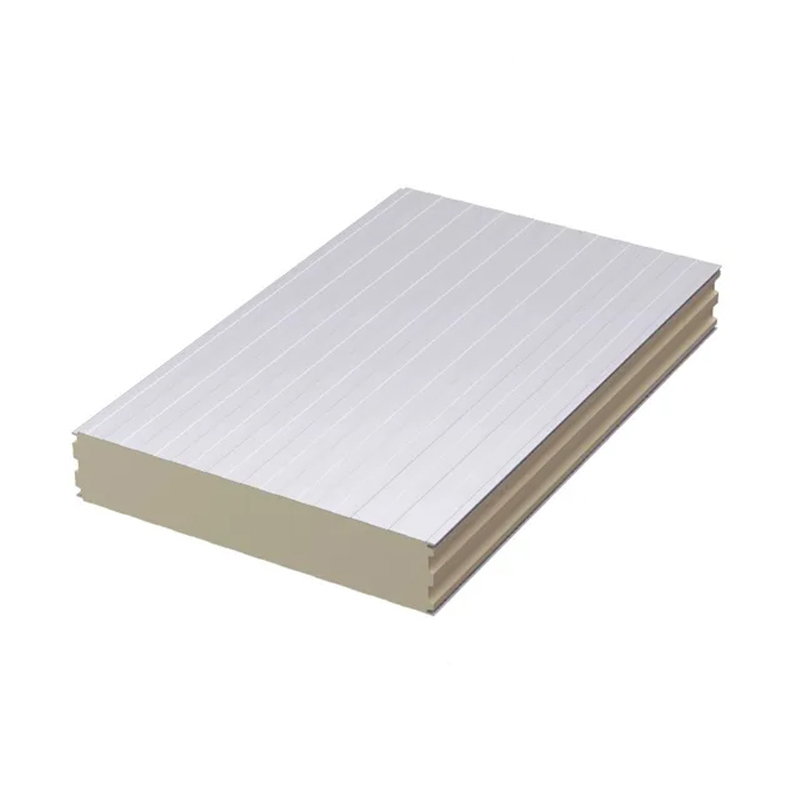
Think of a standard panel as an I-beam designed specifically for thermal management. It features a galvanized steel, stainless steel, or aluminum exterior facing. This metal layer provides structural rigidity while acting as an impenetrable primary vapor barrier. Inside sits a rigid block of PIR foam, typically manufactured at a uniform density of 40 to 42 kilograms per cubic meter. This active insulation layer traps low-conductivity blowing agents to effectively halt heat transfer. Finally, a secondary interior metal sheet mirrors the exterior, ensuring the entire unit remains dimensionally stable under extreme temperature differentials.
In the high-stakes logistics of perishable goods, maintaining a strict thermal envelope is non-negotiable. Fluctuations of even a few degrees can cause catastrophic spoilage of pharmaceuticals, dairy, or fresh produce. Therefore, high-quality cold chain building materials must provide continuous, uninterrupted insulation. Precision-engineered interlocking joints eliminate air infiltration and exfiltration. This airtight seal is essential for maintaining strict temperature controls, satisfying regulatory compliance for food processing, and ensuring the integrity of the global supply network.
Recent market data reveals a massive pivot in the cold chain sector. Driven by stringent environmental mandates and soaring electricity rates, modern facilities are aggressively upgrading their thermal envelopes. Standard Expanded Polystyrene and aging Polyurethane systems are being rapidly phased out across the industry. Facility owners now prioritize long-term energy returns over initial construction costs. High-performance insulation is increasingly viewed as an active financial asset rather than just a passive building material. Furthermore, commercial insurance providers are demanding stricter fire safety ratings, accelerating the widespread adoption of advanced polyisocyanurate technologies.
The correlation between insulation material and monthly electricity bills is governed strictly by the laws of thermodynamics. Understanding these metrics allows facility owners to calculate their expected return on investment with high accuracy.
When evaluating any thermal insulation panel, engineers rely heavily on two critical metrics. R-value measures a material's inherent ability to resist the flow of heat. PIR foam boasts an incredibly high R-value per inch, largely due to its dense, closed-cell structure that effectively traps insulating gases. Conversely, U-value measures the rate of heat transfer through a structure divided by the difference in temperature across that structure. For cold storage, achieving the lowest possible U-value is the ultimate objective.
Substandard insulation materials introduce severe operational inefficiencies. Thermal bridging occurs when a conductive material allows heat to bypass the insulation layer entirely. In poorly designed construction, this often happens at the joints. When ambient heat constantly leaks into a cold room, the refrigeration compressors must operate continuously to remove that heat.
This overwork leads directly to massive spikes in energy consumption. Compressors running at maximum capacity draw significantly more kilowatt-hours. In addition, constant operational stress shortens the lifespan of HVAC and refrigeration components, leading to expensive emergency repairs. When warm, moist air infiltrates a freezer room, it condenses and freezes. This creates hazardous ice accumulation on evaporators and floors, requiring energy-intensive defrost cycles to mitigate.
The financial impact of upgrading insulation is highly measurable. If a facility replaces degraded legacy panels having a U-value of 0.40 W/m²·K with modern PIR panels achieving a U-value of 0.15 W/m²·K, the heat ingress through the envelope drops by over 60 percent. Consequently, the refrigeration system expends significantly less energy mitigating envelope heat gain. For a large-scale logistics hub, this reduction in thermal transmittance routinely translates to a 20 to 40 percent decrease in total annual cooling energy consumption.
Selecting the correct structural envelope requires an objective evaluation of competing materials. While Polyisocyanurate, Polyurethane, and mineral wool all serve as industrial insulators, their distinct physical properties dictate vastly different applications.
For decades, Polyurethane was the standard for cold storage. However, PIR represents a necessary evolutionary step forward in building science. Both materials offer excellent initial thermal resistance, but PIR maintains its performance more consistently over a longer lifespan due to superior dimensional stability.
The critical differentiator lies in fire behavior. PUR foam is combustible and can melt or drip when exposed to high flames. In stark contrast, PIR exhibits a distinct reaction to fire owing to its highly cross-linked chemical structure. Instead of melting, PIR undergoes carbonization. It forms a protective, non-combustible char layer on its surface that starves the fire of oxygen and shields the deeper core material. This unique trait allows PIR to achieve stringent B1 or B2 fire safety ratings.
Rockwool is spun from molten rock and is entirely non-combustible. It serves as an exceptional material for dividing firewalls. Nevertheless, for cold storage environments, it presents significant engineering challenges. Specifically, Rockwool is highly hygroscopic. If the metal facing of a panel is compromised, the core will rapidly absorb condensation. Because water is an excellent conductor of heat, wet mineral wool loses nearly all its insulating properties.
Furthermore, Rockwool possesses a much higher thermal conductivity compared to PIR. To achieve the same insulation value as a 100mm PIR panel, a Rockwool panel would need to be nearly 170mm thick. This consumes valuable internal storage space and requires heavier structural steel supports due to the material's massive density.
Feature | PIR Polyisocyanurate | PUR Polyurethane | Rockwool Mineral Wool |
|---|---|---|---|
Thermal Conductivity | 0.020 - 0.022 W/m·K | 0.022 - 0.024 W/m·K | 0.035 - 0.040 W/m·K |
Fire Resistance | High Forms protective char | Moderate Combustible, melts | Ultimate Non-combustible |
Moisture Resistance | Excellent Closed-cell above 90% | Good Closed-cell structure | Poor Absorbs water easily |
Weight and Density | Lightweight approx 40 kg/m³ | Lightweight approx 40 kg/m³ | Heavy over 100 kg/m³ |
Specifying the correct thickness for an insulated sandwich panel is a delicate engineering exercise. Under-insulating wastes energy by forcing equipment to run constantly. Over-insulating wastes upfront capital without providing proportionate returns. The decision is driven strictly by the internal target temperature of the facility.
Chillers and processing rooms are widely utilized for fresh produce, dairy products, and certain pharmaceuticals, typically operating between zero and ten degrees Celsius. In these environments, the temperature differential between the external ambient air and the internal room is relatively moderate.
For these applications, industry standards dictate panel thicknesses ranging from 50mm to 100mm. A 75mm or 100mm profile provides an optimal U-value that effectively limits heat ingress without over-allocating the construction budget. It prevents surface condensation on exterior walls while keeping the refrigeration cycle stable and efficient.
Deep freeze environments face extreme thermal stress. The temperature differential can easily exceed 60 degrees. In these scenarios, the risk of thermal bridging and vapor transmission is severely amplified.
Freezers require substantial thermal barriers, typically ranging from 120mm to 150mm. For blast freezers operating at minus 30 degrees Celsius or lower, facility engineers must specify panels measuring 150mm to 200mm. Insufficient thickness in a deep freezer causes the external face of the panel to drop below the ambient dew point. This inevitably leads to severe condensation, pooling water, and hazardous ice accumulation on the outside of the building.
Target Internal Temperature | Facility Type | Recommended PIR Thickness |
|---|---|---|
+10°C to +15°C | Processing Rooms and Loading Docks | 50mm - 75mm |
0°C to +10°C | Chillers for Dairy and Produce | 75mm - 100mm |
-5°C to -18°C | Standard Freezers | 120mm - 150mm |
-18°C to -40°C | Deep Freezers and Blast Freezers | 150mm - 200mm |
While the primary function of a cold storage panel is restricting heat flow, the physical properties of Polyisocyanurate offer secondary advantages that significantly lower the total cost of ownership for a logistics facility.
Construction delays directly translate to lost revenue. Traditional built-up insulation systems require multiple layers to be installed sequentially. In contrast, modern PIR panels are prefabricated, single-component solutions.
Featuring precise interlocking joint systems like engineered tongue-and-groove slip-joints, these panels erect rapidly. This modular design drastically reduces heavy machinery requirements on-site, minimizes construction downtime, and allows a smaller crew to enclose a large facility in a fraction of the time.
In temperature-controlled logistics, water vapor is a constant threat. Vapor pressure constantly drives moisture from the warm exterior toward the cold interior. If water penetrates the insulation core and freezes, it expands, permanently destroying thermal resistance.
PIR features a highly cross-linked, closed-cell structure exceeding 90 percent, making it inherently hydrophobic. When combined with impermeable steel facings, the panel acts as an absolute vapor barrier. This moisture resistance prevents the growth of hidden mold, mildew, and bacteria, ensuring the facility meets strict hygienic standards required by global food regulatory bodies.
The performance of a cold room relies entirely on manufacturing precision. Sourcing components from a substandard manufacturer leads to micro-gaps in joints, inconsistent foam density, and eventual thermal failure. Evaluating suppliers rigorously is the final step in securing your energy returns.
When evaluating manufacturers, procurement teams must look beyond the initial price per square meter. The precision of the tongue-and-groove profile determines the airtightness of the facility. Poorly milled joints require excessive sealants and remain prone to thermal bridging. The metal facings must feature food-safe Polyester or PVDF coatings to resist harsh cleaning chemicals and continuous moisture. Furthermore, a uniform core density of approximately 40 to 42 kilograms per cubic meter is mandatory to guarantee stated load capacities.
Securing reliable components is critical for modern logistics. As a specialized manufacturer, GreenLvGreen delivers precision-engineered solutions tailored for demanding environments. Their manufacturing process prioritizes uniform foam density and exact joint tolerances, eliminating the risk of thermal bridging.
Whether you are constructing a moderate chiller or a deep blast freezer, sourcing your materials from GreenLvGreen guarantees that your insulation will perform exactly to specification. With customizable thickness options ranging from 50mm up to 200mm, certified B1 fire ratings, and food-grade surface treatments, their panels provide the structural foundation necessary for a highly efficient, compliant, and profitable cold storage operation.
Investing in high-quality insulation is the single most effective strategy to slash monthly energy costs in temperature-controlled logistics. This strategic upgrade lowers long-term facility maintenance expenses while protecting valuable perishable inventory from thermal fluctuations.
Proper insulation functions as an active energy-saving asset, paying dividends year after year through reduced compressor workloads. By understanding the critical differences in material science, thickness requirements, and joint engineering, facility managers can build structures optimized for maximum profitability.
Evaluate your specific thermal requirements today. Visit GreenLvGreen to explore precision-engineered solutions and select the optimal specifications for your next facility project to ensure absolute temperature stability and minimal energy waste.
Energy savings depend heavily on the baseline comparison and local climate conditions. Upgrading from poorly insulated legacy materials to properly sized PIR panels reduces cooling energy consumption by 30 to 40 percent. The exceptionally high thermal resistance minimizes the workload on refrigeration compressors, leading to substantial drops in monthly electricity utilization.
While they look similar externally, cold storage panels are specifically engineered for extreme environments. They feature higher density PIR cores, thicker profiles reaching up to 200mm, and highly specialized airtight joint profiles like deep tongue-and-groove mechanisms. These engineering enhancements handle severe internal-external temperature differentials and prevent vapor transmission.
They are highly safe and widely mandated in the food industry. The exterior steel or aluminum facings are treated with food-safe, antibacterial, and non-toxic coatings such as specialized Polyester or PVDF. Furthermore, the closed-cell nature of the core is impermeable to moisture, meaning it will not harbor mold, mildew, or pests.
When installed correctly and maintained under normal operating conditions, these structures have an operational lifespan exceeding 30 years. Unlike fibrous insulation materials that absorb moisture and sag over time, rigid PIR foam retains its structural integrity, compressive strength, and thermal resistance consistently throughout its entire lifecycle.
Due to their unique highly cross-linked chemical structure, quality PIR panels undergo carbonization rather than melting when exposed to flames. This forms a protective char layer that shields the core. Consequently, they routinely achieve stringent B1 or B2 fire retardancy certifications, which are frequently required by commercial insurance providers and local building codes.
Precision-engineered tongue-and-groove joints create a seamless, airtight seal between panels. This eliminates thermal bridging, which is the primary cause of warm ambient air infiltrating the cold space. By blocking this air leakage, the panels prevent moisture from entering, condensing, and ultimately freezing on the interior walls and refrigeration equipment.


