
English 


Views: 0 Author: Site Editor Publish Time: 2026-08-28 Origin: Site


Post-harvest crop loss carries a massive financial penalty for farming operations. Minor temperature fluctuations degrade entire harvests within days, while sudden humidity drops cause irreversible moisture loss. You face a significant engineering challenge when constructing a facility to protect these perishable assets. You must maintain strict, uniform microclimates. External weather extremes and internal biological heat loads from crop respiration complicate this process. Standard building materials fail under these rigorous demands. Traditional insulation absorbs moisture, sags, and loses thermal resistance over time. Purpose-built insulated panels provide the foundational engineering solution. They create an impermeable thermal envelope around your crops. This shifts your focus from basic construction materials to specialized agricultural refrigeration systems designed specifically for high-yield preservation.
Thermal Consistency: Specialized vegetable cold storage panels provide continuous insulation, drastically reducing the energy required to offset the biological heat generated by stored crops.
Moisture & Vapor Control: Impermeable metal facings act as strict vapor barriers, preventing condensation, mold growth, and panel degradation in high-humidity environments.
Structural Efficiency: High strength-to-weight ratios allow for faster construction times, reduced structural framing costs, and highly scalable facility designs.
Cold Chain Versatility: Modular panels easily adapt to various facility zones, from long-term holding to active processing and temporary staging areas.
Compliance & Hygiene: Smooth, washdown-ready panel finishes ensure compliance with food safety regulations and simplify facility sanitation.
A successful storage environment requires absolute environmental control. You must hold specific temperature ranges without deviation. Leafy greens demand near-freezing temperatures around 32°F to 34°F. Root vegetables like potatoes require slightly warmer environments, typically between 40°F and 45°F. High relative humidity is mandatory across the board. Most crops need 90 to 98 percent humidity to prevent wilting and weight loss. You must also manage controlled atmospheric composition. Managing oxygen and carbon dioxide levels slows the ripening process. Achieving these metrics requires a highly engineered structural envelope. Any breach in this envelope compromises the entire system. Drafts introduce warm air. Poor insulation allows heat transfer. You need an airtight perimeter to meet these strict success criteria and keep your cooling equipment running efficiently.
Harvested vegetables remain living organisms. They continue to respire after leaving the field. This respiration process consumes oxygen and releases carbon dioxide. It also generates substantial biological heat. This heat load varies significantly between crop types. Broccoli and sweet corn have extremely high respiration rates, dumping massive amounts of heat into the room. Potatoes and onions respire much slower. Your cooling system must continuously counteract this internal heat generation.
Crop Respiration and Heat Generation Metrics
Crop Type | Ideal Storage Temperature | Respiration Rate Category | Cooling Load Impact |
|---|---|---|---|
Broccoli | 32°F (0°C) | Extremely High | Requires aggressive, continuous heat removal |
Sweet Corn | 32°F (0°C) | High | High sensible heat load on evaporators |
Carrots | 32°F (0°C) | Moderate | Steady, manageable heat generation |
Potatoes | 40°F - 45°F (4°C - 7°C) | Low | Minimal continuous cooling required |
If the building envelope lacks sufficient thermal resistance, external heat compounds this internal load. The refrigeration equipment then runs constantly. This leads to excessive energy consumption and premature equipment failure. Proper insulation isolates the internal environment. It allows the cooling system to focus solely on removing biological heat rather than fighting the outside weather.
Moisture management dictates profitability in fresh vegetable storage. Crops sold by weight lose market value as they lose water. Dry air pulls moisture directly from the produce. You must maintain high internal humidity to prevent this water loss. However, high humidity creates severe condensation risks. When warm external air meets a cold, poorly insulated wall, water vapor condenses. This condensation leads to ice buildup on ceilings, walls, and evaporator coils. Ice damages structural components and creates safety hazards for forklift operators. Condensation also breeds mold and bacteria. Mold spores ruin entire storage rooms rapidly. A compromised thermal envelope guarantees these moisture problems. You need strict vapor barriers to separate the internal and external climates completely.
Insulated Metal Panels (IMPs) represent the industry standard for controlled environments. They differ entirely from traditional stick-built construction. Stick-built facilities rely on fiberglass batts or spray foam insulation pushed between wood or steel studs. Fiberglass absorbs moisture in high-humidity settings. Wet fiberglass loses its insulating properties immediately and sags inside the wall cavity. Spray foam often leaves hidden voids and thermal bridges around the framing members. IMPs eliminate these variables. They arrive at the site as pre-engineered, single-component building blocks. They combine exterior cladding, rigid insulation, and interior finishes into one unit. This modular approach guarantees consistent thermal performance across the entire wall surface. It removes the inconsistencies associated with field-applied insulation methods.
The insulating core determines the panel's performance capabilities. Manufacturers inject liquid foam between two metal skins during the fabrication process. This foam expands and cures, bonding permanently to the metal facings.
Insulation Core Comparison for Agricultural Facilities
Core Material | Thermal Resistance (Per Inch) | Fire Performance | Primary Application |
|---|---|---|---|
Polyurethane (PUR) | R-7 to R-8 | Standard | Deep freeze, strict climate control |
Polyisocyanurate (PIR) | R-7 to R-8 | Superior (Self-extinguishing) | Large scale facilities, strict fire codes |
Expanded Polystyrene (EPS) | R-4 to R-5 | Low | Temporary staging, moderate cooling |
PUR and PIR cores dominate agricultural applications. They offer the highest R-values available. This allows for thinner walls while maintaining strict climate control. PIR provides superior fire resistance, often required by commercial building codes for large-scale distribution centers. EPS serves as a cost-effective alternative. You use EPS for moderate temperature zones or temporary holding areas where strict thermal boundaries are less critical.
A complete vegetable cold room relies on the composite structure of these panels. The exterior metal skin repels weather and physical impacts. The interior metal skin provides a sanitary, washable surface. The rigid foam core sits between these skins. This core provides structural rigidity and thermal resistance. The edges feature highly engineered interlocking joints. These joints force the panels to snap together tightly. This composite design creates a self-supporting wall system. It resists moisture penetration from both sides. The panels do not sag, settle, or compress over time. The structural integrity remains constant throughout the facility's lifespan.
Modular panels adapt to every zone within your facility. You customize panel thicknesses based on the specific room function. Rapid-cooling blast chillers require six-inch or eight-inch panels. These thick panels handle extreme temperature differentials when pulling field heat out of freshly harvested crops. Processing rooms operate at milder temperatures. Four-inch panels typically suffice for these active work zones where employees pack and sort produce. Temporary staging areas might only require three-inch panels. You also customize the metal facings. High-traffic loading docks need heavy-gauge steel to resist forklift impacts. Washdown rooms require specialized coatings to withstand harsh cleaning chemicals. This versatility allows you to engineer every square foot of the facility for its exact purpose.
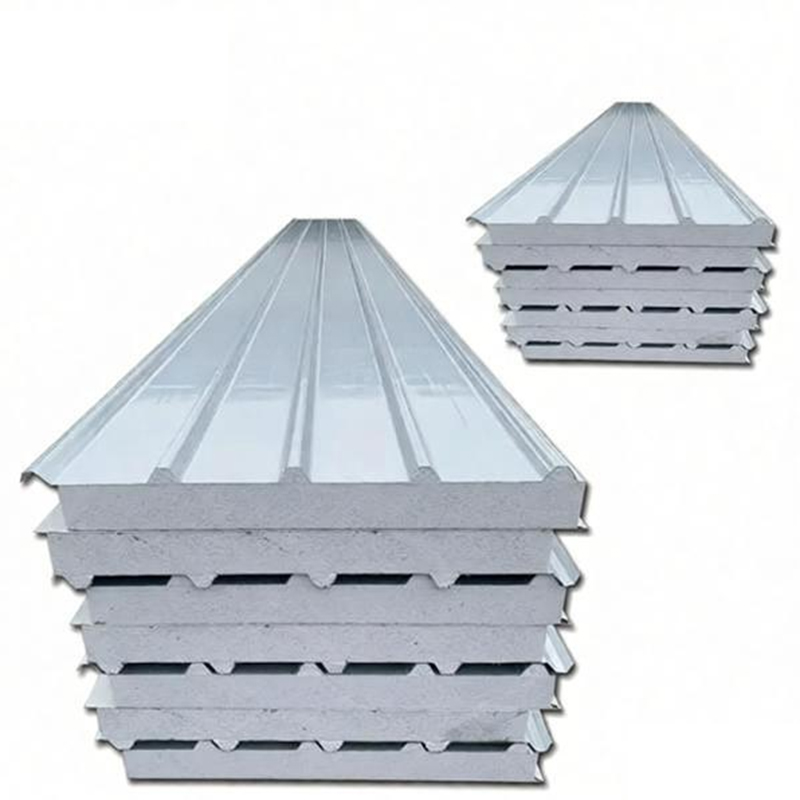
You must calculate the necessary panel thickness before construction begins. This calculation depends on your required internal temperature and external climate extremes. R-value measures thermal resistance. Higher R-values mean better insulation. U-value measures thermal transmittance. Lower U-values indicate less heat transfer. Storing root vegetables in a mild climate requires moderate R-values. Storing leafy greens in a desert climate demands maximum thermal resistance. You calculate the delta between the hottest external summer day and your lowest internal setpoint. This temperature differential dictates your panel specifications. Undersized vegetable cold storage panels force refrigeration systems to run continuously. Oversized panels waste upfront capital. Precise thermal calculations ensure optimal equipment performance.
Vapor drive presents a constant threat to agricultural buildings. Moisture naturally moves from warm areas to cold areas. In summer, external humidity tries to push into the cold room. Impermeable steel or aluminum faces stop this vapor drive completely. They act as a highly effective vapor barrier with a perm rating of nearly zero. Moisture cannot penetrate the metal skin. The insulation core remains dry. Dry insulation maintains its stated R-value. This prevents mold growth inside the wall cavity. It also keeps your energy bills low. Traditional buildings rely on plastic sheeting for vapor barriers. Plastic sheeting punctures easily during installation and degrades over time. Metal panel facings eliminate this risk entirely.
The weakest point of any wall system is the seam between components. IMPs utilize sophisticated joint designs to eliminate this weakness. Tongue-and-groove joints physically interlock the panels. Cam-locks pull the panels tightly together during installation. Installers apply non-skinning butyl sealant into the female groove before engaging the panels. This creates an airtight seal across the entire wall. Airtight seals prevent thermal bridging. They stop warm air from leaking into the cold room. They also control ethylene gas leakage. Many vegetables release ethylene as they ripen. Ethylene accelerates the ripening of surrounding crops. You must contain and vent this gas properly. Airtight panel joints prevent ethylene cross-contamination between different storage zones.
Agricultural facilities must meet strict food safety regulations. Facility sanitation requires frequent, aggressive cleaning. Porous wall materials harbor bacteria and fail health inspections. IMPs feature smooth, non-porous metal facings. You specify USDA-approved plastisol or polyester finishes for the interior skins. These coatings withstand harsh chemical cleaning. They resist corrosion from sanitizing agents like peracetic acid or chlorine dioxide. High-pressure washdowns do not damage the panel surface. Water simply sheets off the walls. This washdown capability simplifies your daily sanitation protocols. It ensures compliance with local and federal food safety mandates. It protects your crops from bacterial contamination during storage.
IMPs offer an exceptional strength-to-weight ratio. The rigid foam core bonds tightly to the steel skins. This creates a composite panel much stronger than its individual parts. This strength allows for greater ceiling spans, often reaching 20 to 30 feet depending on the panel thickness and core density. You can build wide, open rooms without internal support columns. Internal columns obstruct forklift traffic. They disrupt optimal airflow patterns from the evaporator coils. They reduce your total usable storage volume. Eliminating these columns improves operational efficiency. The load-bearing capacity of IMPs also lowers structural framing costs. You need less secondary steel to support the walls and ceilings. The panels carry their own weight and resist wind loads effectively.
Agricultural sites often sit in rural or remote locations. Transporting heavy building materials to these sites incurs massive freight costs. IMPs are surprisingly lightweight. A single flatbed truck carries a large volume of square footage. This reduces the number of deliveries required. The lightweight nature also simplifies site handling. Crews stage the panels on dunnage to protect the edges. You do not need massive cranes for standard wall installations. Forklifts and vacuum lifters handle most of the lifting. This logistical efficiency accelerates the project timeline. It reduces the logistical footprint on active farm sites where tractors and harvest trucks need clear access.
Traditional construction requires a multi-step process. Crews frame the walls, install exterior cladding, add insulation, apply vapor barriers, and finish the interior. Each step requires different trades and separate inspections. IMPs offer a single-step installation process. One crew installs the exterior, insulation, vapor barrier, and interior finish simultaneously. The panels lock together rapidly. This slashes labor costs significantly. It also minimizes facility downtime. You can dry-in a building in a fraction of the time. Faster construction means you can start storing crops and generating revenue sooner. Weather delays impact IMP installation much less than traditional framing methods.
Every construction method carries specific risks. You must manage these risks during the design and installation phases to ensure the facility performs as engineered.
Thermal Bridging at Joints: Heat transfers through corners, floor connections, and ceiling joints if not properly detailed. You mitigate this by specifying continuous vapor barrier detailing and requiring proper thermal breaks at all floor and roof intersections during the architectural design phase.
Moisture Infiltration from Poor Sealants: Improperly applied butyl tape or caulking allows vapor to bypass the joint. You mitigate this by mandating certified installation contractors and only hiring crews experienced specifically in agricultural cold storage construction.
Panel Damage During Handling: Forklifts dent the metal skins before installation, compromising the vapor barrier. You mitigate this by enforcing strict site staging protocols and keeping panels in factory packaging until the exact moment of installation.
Improper Cam-Lock Engagement: Failing to fully lock the panels leaves microscopic gaps. You mitigate this by requiring site supervisors to visually inspect and test every joint lock before applying the final interior silicone bead.
Premium insulated panels require a higher initial capital outlay than basic fiberglass and tin. You must evaluate this cost through the lens of operational savings. High-performance panels reduce your required HVAC tonnage. You buy smaller, less expensive refrigeration equipment because the heat load calculations are lower. Once operational, the airtight envelope slashes monthly energy consumption. The cooling system cycles less frequently. It runs for shorter durations. These daily energy savings accumulate rapidly. In most agricultural facilities, the energy savings offset the higher panel costs within the first few years of operation. The financial model shifts from upfront expense to long-term operational efficiency.
Agricultural environments destroy standard building materials. High humidity, chemical washdowns, and forklift traffic take a heavy toll. IMPs offer exceptional durability in these harsh conditions. The metal skins resist physical impacts. The closed-cell foam core does not absorb water. The panels do not sag or settle over time. Traditional insulation requires replacement when it gets wet or compresses. IMPs require minimal maintenance. You wash them down and inspect the caulking joints annually. This extended lifecycle greatly improves your return on investment. The thermal performance on day one remains identical to the thermal performance in year twenty.
The ultimate value of these panels lies in crop preservation. Post-harvest shrink destroys profit margins. Shrink occurs when vegetables lose weight, rot, or ripen prematurely. Maintaining exact thermal parameters directly extends the life of your food products. It prevents moisture loss. It slows respiration. It stops mold growth. This translates directly to higher sellable yield. You bring more product to market. You command higher prices for superior quality. The panels protect your inventory. The financial return of reducing crop loss far outweighs the construction costs of the facility.
Standard construction materials cannot support the rigorous demands of fresh produce preservation. You cannot compromise on vapor barriers or thermal resistance. Specialized insulated panels represent a mandatory investment for viable, profitable operations. They provide the structural integrity and environmental control necessary to prevent catastrophic crop loss. You must select panels based on precise engineering requirements.
Hire a qualified refrigeration engineer to conduct a comprehensive thermal load calculation for your specific crop volume.
Request technical data sheets from reputable IMP manufacturers to verify R-values and vapor barrier specifications.
Audit your proposed facility layout to determine the optimal panel thickness for different temperature zones.
Select an installation contractor with documented experience in airtight agricultural facility construction.
A: The insulated panels are the modular building blocks used to construct the physical enclosure of the vegetable cold room. You assemble the panels to create an airtight box, which is then paired with a refrigeration system to control the internal climate.
A: R-values typically range from R-15 to R-40+. The exact requirement depends on whether the facility is a standard cooler operating above freezing or a specialized room requiring strict climate control in extreme external heat.
A: The metal facings act as a highly effective vapor barrier. They prevent external moisture from entering the insulation core where mold typically breeds, thus maintaining panel integrity and keeping the internal environment sanitary.
A: Yes. IMPs can be installed as a box-in-a-box solution. Crews erect the self-supporting panels within existing warehouses or barns to create highly controlled microclimates without altering the primary exterior structure.
A: Airtight interlocking joints prevent the escape or cross-contamination of ethylene gas. Containing this gas is critical for managing the ripening process of stored vegetables and preventing premature spoilage in adjacent rooms.
A: With proper installation and routine maintenance, high-quality IMPs offer excellent durability. They can last 20 to 30 years in harsh agricultural environments without any significant degradation in their thermal performance.


