



Views: 0 Author: Site Editor Publish Time: 2026-04-16 Origin: Site


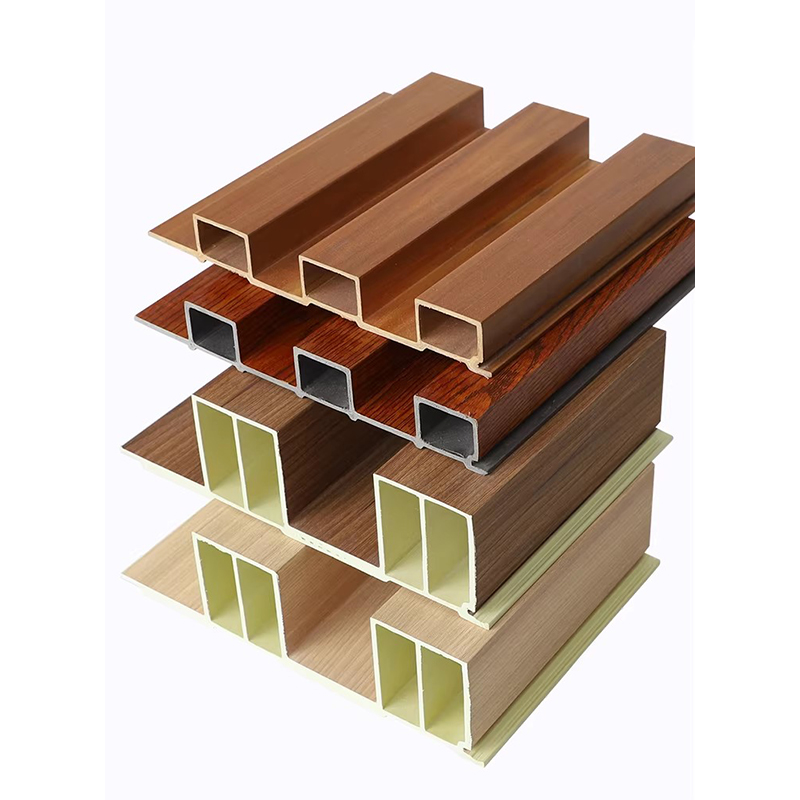
Wood Plastic Wall Panels are decorative wall cladding materials designed to give spaces the look of wood while improving durability, consistency, and ease of maintenance. In practical terms, they are widely used in feature walls, commercial interiors, corridors, balconies, and other projects where buyers want a wood-style finish without the instability and upkeep of solid wood.
For many buyers, the real question is not just what wood plastic wall panels are, but whether they are suitable for the project. That depends on appearance requirements, fire rating, environmental standards, installation method, and long-term maintenance expectations. When selected correctly, these panels can offer a balance of design flexibility, stable quality, and faster installation.
Wood Plastic Wall Panels are not simply raw solid wood boards. In the product category discussed here, the panel structure is designed for decorative performance and dimensional stability. A typical panel includes a decorative surface layer, a solid core layer, and a protective outer layer formed through a high-temperature, high-pressure process.
This type of construction helps the panel deliver a uniform finish across large areas, which is one of the main reasons it is often chosen for hotels, offices, apartments, cabinets, column wrapping, and background walls. Compared with natural veneer, it is usually easier to keep the visual effect consistent from panel to panel.
Traditional wall finishes such as on-site veneering or natural wood cladding can create a premium look, but they also come with common project problems: longer installation time, color variation, higher maintenance needs, and greater sensitivity to moisture or surface wear. Wood Plastic Wall Panels are popular because they solve several of these practical issues at once.
For example, high-definition versions can use 600dpi synchronized wood-grain printing to create a realistic wood look, with more than 200 decorative textures available. That gives designers broader freedom to match modern, classic, luxury, or commercial interiors without relying on the limited availability of natural wood grains.
They are also attractive from an operations perspective. In many projects, material consistency matters as much as appearance. Contractors and procurement teams usually prefer panels that are easier to standardize, easier to install, and easier to replace later if needed.
One of the strongest selling points is appearance control. Natural wood has visual warmth, but it also has unavoidable differences in grain, tone, and supply batch. Wood Plastic Wall Panels can deliver a more repeatable finish across a full project. For developers, hotel groups, and fit-out contractors, this is often a major advantage.
Panels with high-definition wood-grain technology can reach a very realistic decorative effect while offering broader design choice, including oak, walnut, stone-inspired finishes, and other customized patterns.
Wall surfaces in public or high-use spaces are exposed to friction, cleaning, and accidental impact. A panel with a wear-resistant protective layer is easier to manage in these environments. In the product information provided, the panel surface can achieve wear resistance above 4,000 revolutions and 4H scratch resistance, which makes it better suited for regular-use interior spaces than many traditional decorative finishes.
This is especially relevant in offices, hotels, corridors, retail stores, and furnished apartments, where surface durability affects both maintenance cost and visual lifespan.
A decorative wall system must look good after installation, but it also has to remain presentable over time. Wood Plastic Wall Panels are often chosen because the surface is easier to clean than untreated natural materials. Common stains can usually be wiped away with routine cleaning, reducing daily maintenance pressure.
For property managers and commercial buyers, this is not a small detail. A finish that is easy to maintain can reduce labor costs and improve long-term user satisfaction.
Environmental performance is now a central purchase factor, especially for residential projects, schools, hospitality spaces, and export markets. Buyers increasingly ask about formaldehyde emissions, VOC control, and compliance level before they discuss color or price.
In the product data provided, the wall panel can use ENF-grade eco-friendly boards and low-VOC materials, with formaldehyde emission as low as ≤0.025mg/m3. That makes it more suitable for buyers who need low-emission decorative materials for indoor use.
In real procurement work, this should still be checked against the final product specification, test report, and destination market requirement. Environmental claims should always match the actual model being purchased.
Installation efficiency can directly affect project scheduling. Compared with traditional on-site decorative work, standardized wall panels can help reduce labor complexity and shorten construction time. Panels with prefabricated grooves and standardized sizes are easier to align and install, especially in larger projects.
This matters in renovation cycles, apartment delivery schedules, hotel fit-outs, and other time-sensitive interior jobs. A panel that installs faster can help control both labor cost and project delay risk.
Wood Plastic Wall Panels are commonly used in both residential and commercial interiors. Typical applications include:
Feature walls in living rooms, bedrooms, and reception areas
Hotel room walls and corridor cladding
Office decoration and meeting room finishes
Cabinet surfaces and column coverings
Balcony walls and selected semi-protected areas
Retail display walls and branded commercial interiors
The main reason for this broad use is versatility. Buyers can use one decorative system across multiple surfaces while keeping a unified design language.
This is one of the most common comparison points for buyers.
Solid wood veneer offers natural uniqueness, but that uniqueness also brings inconsistency. Every sheet can look slightly different, and natural materials are generally more sensitive to environmental conditions. Wood Plastic Wall Panels, by contrast, are designed for stable visual output, repeatable texture, and better cost control.
That does not mean one material is always better than the other. Solid wood veneer may still be preferred in premium bespoke interiors where natural variation is part of the design intent. But for large-scale projects, brand standardization, easier maintenance, and controlled budgets, Wood Plastic Wall Panels are often the more practical choice.
Not all panels are equal. A buyer should evaluate the product against the actual use case rather than selecting based on appearance alone.
Ask how the decorative layer is produced. High-definition printing and synchronized wood-grain technology generally provide a more convincing finish than lower-grade decorative surfaces.
If the panel is going into a hotel, office, retail space, or corridor, surface durability matters. Check wear resistance and scratch resistance instead of relying only on sample-board appearance.
Confirm whether the panel meets the level required for your project. For indoor decoration, formaldehyde emission data and related environmental certifications are usually more important than marketing language.
If the project is in a public or regulated interior environment, fire rating should be reviewed early. Some product lines offer B1 flame-retardant performance, which may be important for commercial applications.
Standard sizes can simplify procurement and installation. In the available product data, common sizes include 60×240 cm, 120×240 cm, 40×300 cm, and 60×300 cm, with a thickness of 22 mm. Buyers should confirm whether these dimensions match transport, cutting, and site installation requirements.
Some panels are installed with adhesive bonding, while other systems may involve additional support structures or profiles. The correct installation method depends on wall condition, project speed, and finish expectation.
In many cases, yes. They are especially suitable for commercial projects that need three things at the same time: a wood-style appearance, stable batch consistency, and efficient installation.
For example, a hotel renovation project may need to complete room upgrades across dozens or hundreds of spaces on a tight schedule. In that scenario, a panel system with consistent decorative output and faster installation can be more practical than natural veneer work. The same logic applies to offices, chain stores, furnished apartments, and large residential developments.
The key point is that the panel should match the performance demands of the project, not just the design mood board.
Yes. Wood Plastic Wall Panels are practical, but buyers should still evaluate them carefully.
First, decorative products should not be treated as universally interchangeable. Performance can vary by structure, coating, core material, and installation system.
Second, moisture exposure, UV exposure, cleaning method, and substrate condition can all affect long-term results. A panel that performs well indoors may not automatically be the right choice for every exterior or high-humidity environment unless the exact specification supports that use.
Third, environmental and fire-performance claims should always be checked with real product documentation. A sample panel and a marketing brochure are not the same as confirmed project compliance.
If you are sourcing Wood Plastic Wall Panels for distribution, contracting, or project supply, supplier evaluation matters almost as much as product evaluation.
A reliable supplier should be able to provide:
Clear technical specifications
Stable size and color consistency
Environmental and fire-related test documentation where applicable
Customization options for patterns and sizes
Packaging suitable for export or project delivery
Practical support on installation and after-sales issues
This is particularly important for OEM buyers, wholesalers, and contractors managing repeat orders.
Wood Plastic Wall Panels are a practical decorative solution for projects that need the visual appeal of wood with more consistent quality, better wear resistance, lower maintenance, and easier installation. They are widely used because they help solve real project problems, not because they are simply a trend material.
For buyers, the best decision comes from matching the panel to the job. Look beyond the surface pattern. Check durability, emissions, fire performance, size, installation method, and supplier reliability. That is the fastest way to determine whether Wood Plastic Wall Panels are the right choice for your project


