
English 


Views: 0 Author: Site Editor Publish Time: 2026-07-04 Origin: Site


Architects, facility managers, and contractors face a constant balancing act on every job site. You must align strict thermal efficiency requirements with mandatory fire safety regulations. At the same time, keeping project budgets strictly under control remains a crucial daily challenge. Traditional building insulation often falls significantly short when trying to meet modern, stringent building codes. Enter advanced polyisocyanurate technology. Specifying PIR Sandwich Panels provides a highly engineered building envelope material. They excel in high-demand environments where older, conventional systems simply fail. Our goal today is to move far beyond basic product definitions. We will provide a clear, evidence-based evaluation showing exactly where these panels belong in your upcoming construction project. You will learn how they directly compare to standard alternatives like polyurethane and mineral wool. Finally, we will uncover what specific implementation risks you need to anticipate during actual construction.
Primary Use Case: PIR sandwich panels are predominantly specified for cold storage, food processing, and high-risk industrial facilities due to their superior thermal resistance and fire-retardant properties.
The Fire Safety Advantage: Unlike standard PUR (Polyurethane), PIR alters its chemical structure under high heat, forming a protective char layer rather than melting, making it critical for insurance compliance.
Thermal Efficiency: Offers one of the lowest thermal conductivities among commercial insulations, allowing for thinner walls and increased usable internal floor space.
Implementation Caution: High rigidity means precise structural alignment is required during installation to prevent thermal bowing and joint failure.
Fluctuating internal temperatures cause severe product spoilage in logistics facilities. They also lead to astronomically high energy costs over time. Facility managers constantly battle to maintain stable deep-freeze conditions during peak operational hours. To solve this pressing problem, PIR insulated panels provide a highly reliable continuous vapor barrier. They offer exceptionally high R-values across the entire wall surface. This structural consistency completely prevents thermal bridging in demanding deep-freeze environments. You stop energy leaks before they happen.
Food processing plants require highly hygienic and tightly controlled surfaces. You need smooth walls to handle aggressive daily wash-down routines. They must never harbor harmful bacteria or trap airborne contaminants. Meanwhile, ambient room temperatures must remain strictly stable during production. Metal-faced PIR solutions deliver exactly this required performance. They offer dedicated food-safe coatings like PVC or PET. Tight interlocking joints ensure strict health and safety compliance. Your facility passes regulatory inspections easily.
Surface Hygiene: Smooth coatings prevent dirt accumulation.
Chemical Resistance: Facing materials withstand harsh industrial cleaning agents.
Temperature Control: Core insulation keeps processing zones at exact temperatures.
Large-span industrial buildings demand very rapid construction timelines. You need high structural integrity immediately upon installation. However, you cannot afford excessive weight burdens on the primary foundation. High strength-to-weight ratios solve this engineering dilemma perfectly. Lighter materials allow for much longer spans between structural supports. Consequently, you reduce secondary steelwork requirements significantly. Your construction crews finish building envelopes faster and safer.
Choosing the correct core material dictates the safety and efficiency of your entire facility. You must evaluate polyisocyanurate against both traditional polyurethane and mineral wool. Each material displays unique physical reactions under environmental stress.
Fire performance marks the absolute biggest difference between these two chemicals. PIR alters its molecular structure and forms a protective char when exposed to direct flames. This charring creates a vital thermal barrier. PUR remains highly combustible and simply melts under extreme heat. This specific charring behavior proves absolutely critical for meeting modern commercial fire codes. Thermally, both options offer excellent initial insulation. However, PIR maintains its structural stability across much wider temperature extremes. It resists shrinkage far better than standard PUR.
Weight and handling characteristics differ drastically on the job site. PIR weighs significantly less than standard Rockwool. This lowers the overall structural load on your steel frame. It also massively accelerates the physical installation process for your crews. Regarding moisture resistance, polyisocyanurate uses a closed-cell internal structure. It remains highly water-resistant even under heavy condensation. Rockwool absorbs moisture quickly if its exterior vapor barrier becomes compromised. Wet mineral wool quickly loses its specified thermal insulation value.
For ultimate fire resistance, Rockwool holds a coveted A1 non-combustible rating. It acts perfectly for absolute fire containment zones. Polyisocyanurate usually achieves a B-s1, d0 fire-retardant rating.
Best Practice: Choose Rockwool panels strictly for dedicated internal firewalls. Use polyisocyanurate for the overall exterior thermal envelope to maximize energy efficiency.
Feature | PIR (Polyisocyanurate) | PUR (Polyurethane) | Rockwool (Mineral Wool) |
|---|---|---|---|
Fire Reaction | Chars under heat (Fire Retardant) | Melts and burns (Combustible) | Non-combustible (A1 Rating) |
Thermal Efficiency | Excellent (Low conductivity) | Excellent | Moderate (Requires thicker panels) |
Moisture Resistance | High (Closed-cell) | High (Closed-cell) | Low (Absorbs water if exposed) |
Weight | Lightweight | Lightweight | Heavy (Needs stronger framing) |
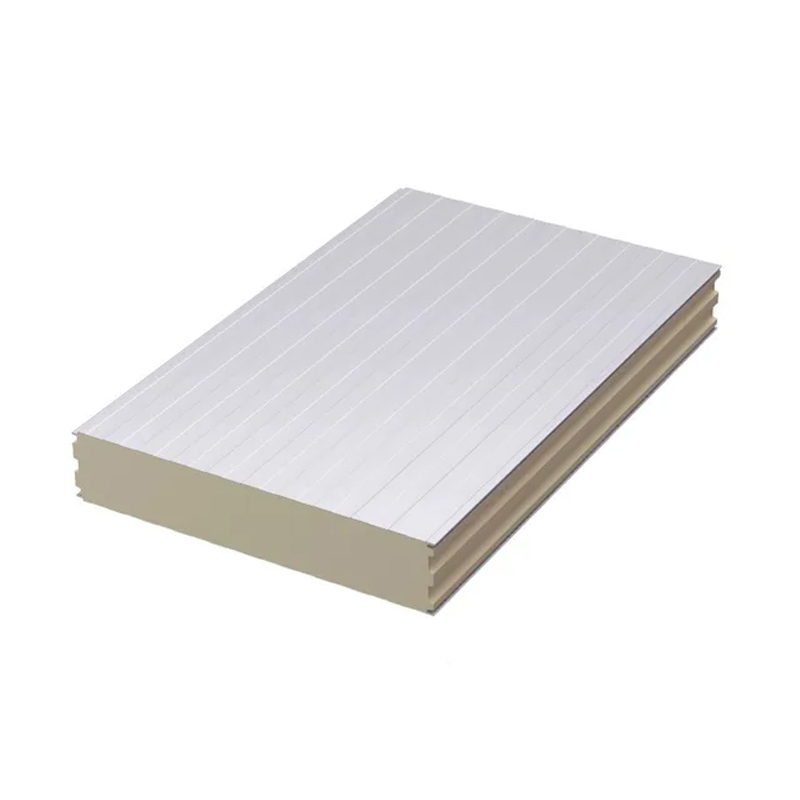
You must match panel thickness carefully during the initial design phase. Consider your specific regional climate zones thoroughly. Evaluate your required internal temperature targets closely. Avoid over-specifying panel thickness just to be safe. Over-specifying wastes valuable project budget immediately. It also unnecessarily reduces your usable internal floor space. Always calculate the exact U-Value required to maintain your target climate.
Independent testing verification remains completely non-negotiable in commercial construction. Look exclusively for FM Global Approvals or EN 13501-1 laboratory certifications. Securing commercial property insurance depends heavily on these exact independent ratings. Proper laboratory certifications actively lower your ongoing insurance premiums. Insurers recognize the inherent safety of a char-forming building envelope.
Always evaluate the exterior metal facing gauge carefully. Check the internal core density against local structural engineering codes. High winds create massive suction forces on exterior walls. Heavy snow deposits dictate necessary roof panel strength.
Verify local maximum wind speeds.
Calculate roof snow load expectations.
Select a metal gauge thick enough to resist deflection.
Confirm the core density supports the required distance between purlins.
Assess the specific joint designs offered by your manufacturer. Labyrinth joints provide superior thermal protection. Concealed fasteners improve exterior aesthetic appeal. Double-seal profiles matter immensely for long-term durability. These mechanisms collectively determine overall air and water tightness. A failing joint system compromises the entire insulated wall.
Common Mistake: Ignoring local wind load codes often causes exterior panel detachment during extreme weather events. Never exceed the manufacturer's maximum recommended span length.
Thermal bowing represents a major physical risk for large facades. Dark-colored exterior metal panels absorb immense direct sunlight. They expand rapidly under intense summer heat. Meanwhile, the cold interior face contracts due to air conditioning or refrigeration. This severe temperature differential causes the panel to bow outward physically. To mitigate this known risk, specify shorter continuous span lengths. Use lighter exterior paint colors to reflect solar radiation. Alternatively, integrate planned expansion cuts directly into the structural design.
Poor joint sealing creates hidden interstitial condensation. Moisture vapor travels deep into the unsealed panel joints. In cold stores, this moisture freezes almost instantly. Expanding ice rapidly destroys the internal joint structure. It forces the metal facings apart from the inside. Strict adherence to butyl sealant application protocols prevents this disaster entirely. Always ensure proper flashing detailing around every single edge and corner.
Edge damage happens very easily during mechanical offloading. Forklifts frequently dent the delicate interlocking edges. Damaged edges ruin the crucial interlocking joint mechanisms. A broken joint renders the unit completely useless for high-spec hygienic environments. You cannot force a damaged joint together without compromising the vapor seal.
Common Mistake: Stacking panels directly on uneven muddy ground causes permanent core warping before installation even begins.
Best Practice: Always enforce the mandatory use of vacuum lifters. Maintain strictly controlled, perfectly level staging areas on your job site.
Acknowledge the upfront financial dynamics immediately. These advanced systems carry a distinct premium over basic EPS or standard PUR alternatives. However, lifecycle savings quickly offset your initial capital expenses. Understanding these drivers helps justify the specification to stakeholders.
Calculate your expected payback periods through severely reduced HVAC energy consumption. Better insulation means cooling compressors run less frequently. Thinner high-efficiency walls also mean a physically minimized structural footprint. This directly yields more usable pallet space inside your warehouse. Furthermore, accelerated construction schedules drastically reduce heavy machinery rentals and labor hours.
Follow a clear, objective decision path when selecting your envelope material.
If fire compliance and maximum thermal efficiency are mandatory in a limited footprint, polyisocyanurate acts as your baseline.
If upfront budget drives the entire project and fire risks remain extremely low, EPS might suffice temporarily.
If absolute non-combustibility is your top regulatory requirement, pivot directly to mineral wool systems.
These insulated structures represent a highly engineered building solution. They belong specifically in demanding environments where thermal efficiency and fire safety intersect perfectly. You cannot afford to compromise on either metric in modern cold storage or manufacturing. Properly specified, they protect your inventory, lower energy usage, and satisfy strict insurance criteria.
Project managers should cross-reference their local fire codes immediately. Compare these regulatory codes directly against specific manufacturer data sheets. Verify your ambient thermal requirements carefully before placing any material orders.
Take the next step in securing your facility envelope. Request a detailed technical consultation today. Download a comprehensive product specification matrix to compare exact thicknesses. Submit your architectural project blueprints to receive a custom engineering quote tailored to your exact facility needs.
A: When installed correctly, they typically offer a robust 30 to 40-year functional lifecycle. The internal core resists degrading or sagging over time. Lifespan heavily depends on maintaining intact exterior metal coatings. Manufacturers usually provide 10 to 25-year warranties specifically covering the exterior paint and structural adhesion.
A: Yes, they perform exceptionally well in dual applications. However, roofing specifications require distinctly different exterior shapes. You must specify deep trapezoidal or corrugated profiles for roofs. These specific shapes handle heavy snow loads and channel heavy rainwater runoff efficiently away from the building joints.
A: Baseline thickness ranges strictly depend on your target temperature. Standard chillers typically require 100mm to 150mm thicknesses. Deep freezers demand 150mm to 200mm or more to prevent thermal bridging. You must always calculate exact specifications based on your local exterior ambient climate conditions.


