
English 


Views: 0 Author: Site Editor Publish Time: 2026-09-23 Origin: Site


You can procure the most advanced insulation materials on the market. But if your construction team ignores proper installation protocols, that premium material becomes virtually useless. Picture a massive temperature-controlled facility. Energy loss originating from poorly sealed joints or misaligned structural components quietly drains thousands of dollars in wasted electricity every single year. When thermal bridging occurs, refrigeration equipment works overtime to maintain baseline temperatures. This accelerates mechanical wear and drives up operational costs exponentially.
In recent years, the Polyisocyanurate or PIR sandwich panel has firmly established itself as the gold standard for modern cold storage construction and pharmaceutical cleanrooms. This dominance is driven by its exceptional thermal resistance, measured by R-value or U-value, alongside highly documented fire-retardant properties.
Looking at the broader commercial sector right now, we are witnessing a massive shift in building methodologies. Driven by stricter global energy codes and a universal push for net-zero emissions, developers are rapidly moving away from traditional expanded foams. Market data shows a clear trend: facility owners are no longer just looking at initial capital expenditures. They are heavily prioritizing long-term lifecycle costs. The industry consensus is absolute. Investing in a high-performance envelope today acts as a permanent hedge against rising energy prices tomorrow. Achieving this truly functional envelope requires much more than simply buying top-tier materials. It demands flawless execution at every single joint, the precise application of vapor barriers, and correct fastening methodologies.
This comprehensive guide walks facility managers, specialized contractors, and commercial builders through the critical installation steps. By mastering joint sealing techniques, substrate preparation, and structural alignment, construction teams can ensure every panel performs exactly as engineered.
Precision is Power: The functional longevity of any insulated structure relies entirely on the precision of its joint connections to prevent thermal bridging, ice buildup, and interstitial condensation.
Mechanical Locking is Crucial: Utilizing specialized locking mechanisms significantly enhances structural integrity and continuous airtightness required for commercial freezers.
Sealants Matter: An effective thermal envelope requires the scientifically correct application of non-hardening butyl tapes, mold-resistant silicone sealants, and continuous vapor barriers.
Roof vs. Wall Dynamics: Vertical installations require vastly different structural load calculations and fastening considerations compared to pitched roof panels.
Avoid Common Pitfalls: Over-tightening metal fasteners, ignoring thermal expansion gaps, and utilizing abrasive cutting tools remain the leading causes of premature panel degradation.
Selecting the correct insulation core is arguably the most consequential decision during the planning phase of temperature-controlled logistics. The chosen material dictates your building's daily energy consumption, fire safety compliance, and overall structural footprint.
In the commercial construction sector, developers typically evaluate Polyisocyanurate, Polyurethane, and traditional Mineral Wool. While standard polyurethane offers decent performance, PIR represents a significant chemical evolution. During manufacturing, it is produced using a higher proportion of methylene diphenyl diisocyanate reacting at elevated temperatures. This creates highly cross-linked isocyanurate rings that provide superior dimensional stability.
The most notable difference lies in fire resistance. PIR panels char when exposed to extreme heat rather than melting or dripping. This actively slows the spread of flames. Furthermore, premium PIR panels offer a core density of 40 to 42 kg/m³ and achieve a remarkable thermal conductivity of just 0.022 W/m·K. Facility owners can achieve the required insulation values with significantly thinner walls, maximizing internal revenue-generating storage capacity.
To put this into perspective, let us look at a direct comparison of common core materials used in the industry today.
Insulation Core | Thermal Conductivity | Fire Resistance | Moisture Resistance | Best Application |
|---|---|---|---|---|
PIR | ≤ 0.022 W/m·K | Excellent - Chars, does not melt | Outstanding | Cold Storage, Cleanrooms |
PUR | 0.024 W/m·K | Moderate | Good | Standard Commercial Buildings |
Mineral Wool | 0.038 W/m·K | Superior - Non-combustible | Poor - Absorbs water | High Fire-Risk Dry Areas |
The failure of an insulated envelope rarely begins with the panel itself. It almost always originates from inadequate site preparation. Rigorous planning before the first panel is lifted by a crane is an absolute necessity.
Before any installation commences, the primary structural frame must undergo a strict dimensional inspection. Whether constructed from heavy-gauge steel purlins or reinforced concrete, the substrate must be perfectly level, plumb, and square. Industry standards dictate a tolerance of no more than ± 3 millimeters over a 3-meter span. If the steel framework is uneven, fastening a rigid panel to it will induce severe mechanical stress. This tension causes the metal facings to warp, delaminate from the foam core, or pull away from the fasteners.
Mishandling materials during the unloading phase is another frequent source of hidden damage. While structurally robust, the panels remain susceptible to localized crushing if handled poorly. Contractors must utilize appropriate lifting equipment like vacuum lifters or forklifts equipped with wide spreader bars to distribute the weight evenly.
Once on-site, the materials must acclimatize. Metal-faced panels expand or contract depending on ambient temperatures. Installing a panel that has been baking in the blistering afternoon sun immediately into a shaded building frame leads to severe thermal shock. As the metal rapidly cools and contracts, it places immense shear force on the fasteners.
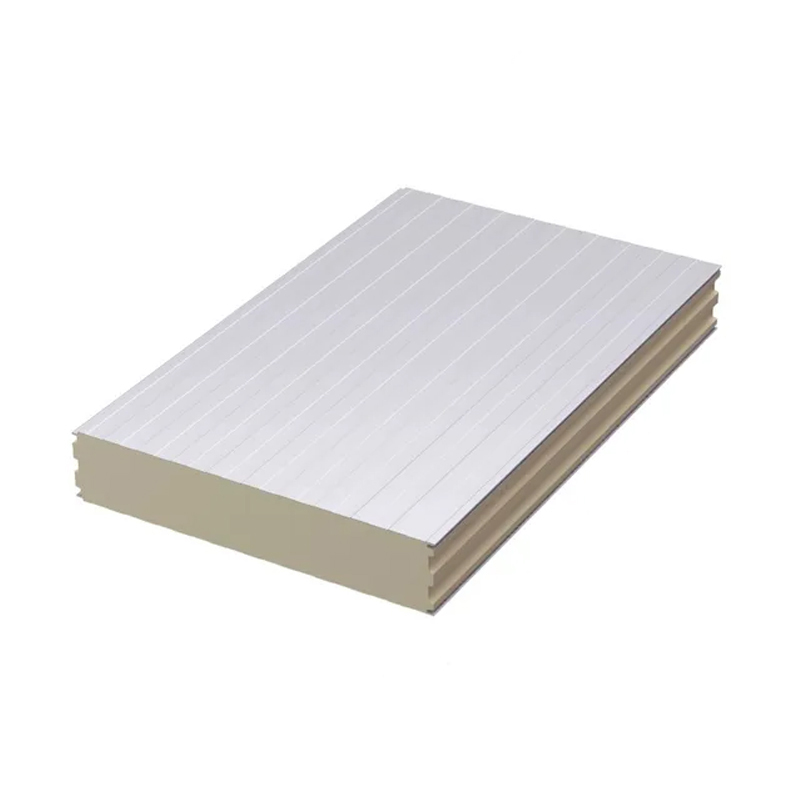
The core of any thermal envelope is highly efficient, but the joints are inherently the most vulnerable points. The continuous performance of the building relies entirely on how effectively these connections are sealed against air, moisture, and thermal transfer.
For environments requiring extreme temperature differentials like blast freezers, the cam lock sandwich panel is the preferred engineering solution. Unlike standard slip joints that rely solely on friction and external fasteners, these systems contain integrated mechanical locking devices embedded directly into the PIR core during manufacturing.
During assembly, a specialized hex wrench is inserted into a small access port on the interior face. Turning the wrench rotates an eccentric hook that securely grabs a steel pin embedded in the adjacent panel. This mechanical action actively pulls the two panels together with immense force, compressing the factory-applied gaskets. The resulting friction-fit eliminates microscopic gaps.
Relying solely on the physical interlock of the panels is insufficient for long-term performance. Secondary sealants are mandatory to establish a true airtight insulation system and prevent interstitial condensation. This destructive phenomenon occurs when warm, moisture-laden air penetrates the joint, reaches the dew point, and condenses into liquid water inside the panel.
Best practices dictate a rigorous dual-sealant approach. First, apply a continuous bead of non-hardening butyl tape within the joint profile before pushing the panels together. Butyl remains permanently flexible, accommodating natural thermal expansion without cracking. Secondly, apply a mold-resistant, neutral-cure silicone sealant to the exterior seams to prevent water ingress from washdowns or weather exposure.
Wall installation requires a systematic approach to ensure vertical alignment, structural load management, and the complete elimination of thermal bridges at the floor and ceiling junctions.
The orientation of the panels is dictated by both the building's structural design and the specific operational application. Vertical layouts are the standard methodology for a cold room wall panel. This orientation allows panels to act as self-supporting structural elements over moderate heights, transferring their own dead weight directly to the floor slab. It also eliminates horizontal seams, drastically reducing the risk of dust accumulation and moisture pooling.
The connection between the concrete floor slab and the wall panel is a notorious zone for thermal bridging and moisture wicking. Installation begins by anchoring a galvanized steel or heavy-duty PVC U-channel to the perfectly leveled floor. Crucially, a thermal break material must be placed beneath the U-channel. We typically use a dense EPDM rubber or high-density polyurethane strip to prevent cold transfer directly into the concrete slab.
Corners represent the weakest geometric point in any insulated structure. To maintain continuous thermal integrity, installers must never allow the internal and external metal facings of connecting panels to touch. Metal is a highly efficient conductor of heat. Instead, leave a deliberate gap at the corner junction. Meticulously fill this void with low-expansion PUR foam. Once cured, rivet custom-folded metal L-flashings into place and seal heavily with silicone.
Roof panels face entirely different environmental stresses than vertical walls. They must endure heavy precipitation, snow loads, and severe wind uplift. Proper installation is vital to maintain a weather-tight envelope over the facility's lifespan.
Unlike flat built-up roofs, an insulated roof panel requires a specific minimum pitch to ensure adequate water drainage. Industry guidelines typically mandate a minimum roof pitch of 5 to 7 degrees. If the roof span exceeds the length of a single manufactured panel, end-laps must be executed. This process involves carefully removing the bottom steel skin and PIR core from the overlapping section of the upper panel.
Because roof panels are subjected to significant aerodynamic wind uplift forces, fastening techniques cannot be compromised. Installers must drive screws at a perfect 90-degree angle relative to the panel surface. To distribute the load and prevent the screw head from tearing through the thin metal facing during severe storms, utilize saddle washers that perfectly match the profile of the roof panel's crowns.
Even when armed with premium materials, construction errors can severely degrade the thermal efficiency and lifespan of the facility. Avoiding these documented mistakes is essential.
Applying incorrect torque to fasteners is a widespread and damaging issue on job sites. Over-tightening crushes the PIR core and creates a visible dimple in the metal facing. This depression acts as a miniature basin where rainwater or condensation pools, eventually leading to rust and structural corrosion. Conversely, under-tightening fails to compress the EPDM rubber washers on the screws, leaving tiny gaps for air and water.
Cutting panels on-site to fit around doors or structural beams is often necessary. However, the choice of tool is critical. Using abrasive tools like angle grinders generates immense localized heat. This heat instantly melts the PIR core, destroying the insulation value at the panel's edge. Furthermore, angle grinders produce hot metal swarf that burns through the panel's anti-corrosion galvanization layer, triggering rapid galvanic corrosion. Always use circular saws equipped with cold-cut blades or specialized metal nibblers.
Failing to account for thermal movement is another massive error. Metal-faced panels are dynamic. Fixing panels too rigidly or failing to leave appropriate expansion gaps at structural junctions will inevitably result in panel buckling. Over time, this stress shears the heads off structural fasteners.
The responsibility for insulation performance does not end once the construction crew leaves the site. Implementing a proactive maintenance protocol ensures the facility operates at peak efficiency for decades.
Facility managers should conduct comprehensive visual inspections at least bi-annually. Key indicators of a failing envelope include peeling silicone sealants at the joints, localized rust spots around fasteners, and condensation buildup on interior walls. Identifying these minor issues early prevents moisture from penetrating deep into the PIR core.
Visual inspections cannot detect internal temperature leaks hidden behind the metal facings. Conducting annual thermal imaging audits using infrared cameras is highly recommended for commercial cold storage. Thermography allows technicians to clearly visualize hidden thermal bridges. Identifying these anomalies allows for targeted repairs before they result in massive energy spikes.
The operational effectiveness of a PIR sandwich panel is entirely dependent on meticulous installation practices, proper joint mechanics, and a rigorous approach to vapor sealing. While the core material provides exceptional thermal resistance, it is the flawless execution of the details that dictates the longevity of the facility. From ensuring substrate levelness to applying precise torque to fasteners, every step matters.
Emphasizing precision during the construction phase pays continuous dividends. It ensures long-term energy savings, unparalleled structural stability, and superior temperature control. If you are ready to upgrade your facility's thermal envelope with industry-leading materials, ensure you select panels engineered for exact tolerances. Visit Greenlvgreen to explore high-performance PIR sandwich panels tailored for your next cold storage project.
The internal locking mechanism creates a significantly tighter, more secure friction-fit than standard slip joints. By actively pulling the panels together, it compresses internal gaskets evenly. This makes it ideal for the extreme pressure and temperature differentials found in sub-zero cold rooms.
No, a minimum pitch is strictly required. Industry standards generally mandate a 5 to 7-degree slope to prevent rainwater from pooling. Standing water will eventually degrade the panel joints, compromise the sealants, and lead to leaks into the building's interior.
Achieving total airtightness requires a combination of perfect structural alignment, precision cutting, and a dual-sealant approach. This involves running continuous butyl tape inside the panel joints before assembly and applying a high-quality silicone sealant to the exterior seams to block vapor and moisture.
When installed correctly and maintained properly, these panels are engineered for incredible longevity. They can easily last 30 to 40 years, or even longer, without losing their structural integrity or experiencing a drop in their thermal insulation performance.
Yes, they are highly versatile and are the standard choice for both applications to create a continuous thermal envelope. However, ceiling panels may require specific structural suspension systems depending on the required span and the weight of the panels.
For blast freezers operating at -35°C to -40°C, industry standards typically require PIR panels with a thickness of 150mm to 200mm. This extreme thickness ensures the thermal conductivity remains low enough to prevent the refrigeration compressors from overworking.
Preventing condensation boils down to eliminating thermal bridges and ensuring absolute vapor tightness. You must use thermal breaks at the floor channels, meticulously apply silicone sealants on all panel joints, and ensure the interior temperature does not drop below the dew point of the ambient air outside the envelope.


