
English 


Views: 0 Author: Site Editor Publish Time: 2026-07-06 Origin: Site


Specifying the wrong insulated panel can lead to failed fire audits, severe thermal bridging, or budget overruns during implementation. Many project managers underestimate the sheer complexity of this decision. We often see structural failures or moisture issues stem directly from poor material selection early on. While Polyisocyanurate (PIR) is increasingly the industry standard for thermal and fire performance, selecting the correct specification requires aligning structural loads, environmental conditions, and compliance codes. You cannot just pick a generic panel off a catalog page. You must evaluate your exact operational demands carefully. This guide provides a strict, engineer-focused framework for evaluating options based on verifiable data and project-specific realities. You will learn how to assess core dimensions, compare alternative insulation materials objectively, and mitigate site installation risks effectively. By following these principles, you will ensure a robust, high-performing building envelope.
PIR outperforms EPS and PUR in fire resistance and thermal retention but requires precise joint installation to prevent condensation and thermal bridging.
Selecting panel thickness must map directly to the facility’s operating temperature delta and the structural span limits of the framework.
Always require verifiable, third-party certification (e.g., FM approval, CE marking) rather than relying on manufacturer marketing claims.
Facing material and coating choices are just as critical as the PIR core, especially in high-corrosion or food-safe environments.
You must first identify your primary operational driver before analyzing materials. Every facility has a defining purpose. Strict temperature control dominates cold storage applications. These buildings demand supreme thermal retention to protect inventory. Conversely, manufacturing plants often prioritize regulatory fire compliance above all else. They need materials capable of containing potential industrial fires. We also see structural efficiency acting as a core driver for expansive logistics warehouses. Pinpoint this main goal early to narrow down your panel options.
Next, you must map out expected environmental conditions meticulously. Look closely at the immediate physical surroundings of the site.
Wind Loads: High wind zones dictate stricter panel span requirements and thicker metal skins.
UV Exposure: Intense sunlight degrades certain outer metal coatings quickly.
Moisture Levels: Coastal or high-humidity areas require absolute vapor barrier continuity.
Chemical Exposure: Industrial zones may subject panels to corrosive airborne particles.
These specific factors directly influence your final panel specification. Neglecting them leads to premature material failure.
You will notice a higher upfront capital requirement for PIR Sandwich Panels compared to legacy materials. However, you must balance this against long-term operational efficiency. Excellent thermal performance yields significant energy savings over the lifespan of the building. HVAC systems run less frequently. Furthermore, superior fire ratings often lead to notable reductions in facility insurance premiums. Underwriters favor non-combustible or highly fire-retardant materials. These ongoing savings dramatically improve your overall return on investment.
Polyurethane (PUR) offers a lower initial barrier to entry. It remains popular for temporary structures. However, Polyisocyanurate (PIR) features a highly distinct isocyanurate ring structure. This chemical difference occurs during manufacturing by using excess isocyanate. The resulting ring structure provides superior dimensional stability. It also delivers significantly higher fire resistance. When intense flames hit PIR, it forms a protective, carbonaceous char layer. PUR lacks this ability. It simply melts or burns faster under extreme heat.
Modern commercial builds are rapidly transitioning away from Expanded Polystyrene (EPS). EPS presents a substantial fire hazard because it generates flaming droplets when ignited. PIR drastically reduces this fire risk. It also offers much lower thermal conductivity. You can achieve exact insulation targets using much thinner walls. This physical advantage maximizes your usable interior floor space. A thinner envelope provides more room for internal racking and operations. This is a massive advantage in premium real estate zones.
We routinely compare these two materials for high-specification projects. Rockwool clearly wins on absolute non-combustibility. It consists of spun mineral fibers. However, PIR provides vastly better thermal efficiency per inch. You need incredibly thick Rockwool panels to match standard PIR insulation values. PIR also boasts superior moisture resistance. Rockwool absorbs water rapidly if joint seals fail. Wet mineral wool becomes heavy and loses its insulation properties entirely. PIR remains dry, rigid, and lightweight.
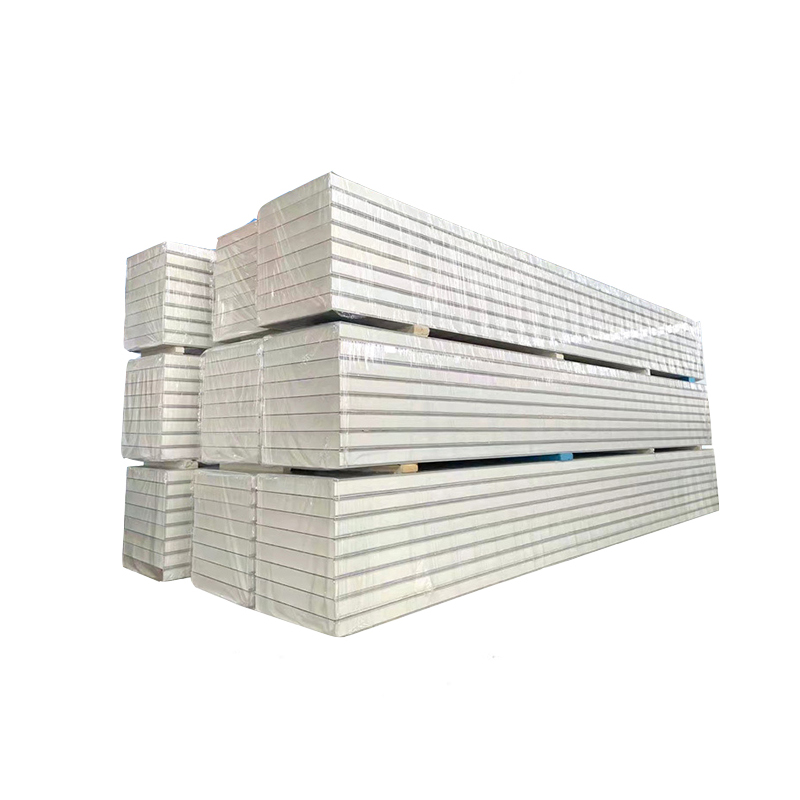
You must match panel thickness directly to your ambient or freezer requirements. Guessing leads to massive energy losses. We rely on a strict correlation matrix to guide this process. Here is a standard reference table mapping core thickness to specific applications:
Facility Application | Target Temperature Range | Recommended PIR Thickness |
|---|---|---|
Ambient Warehousing | +15°C to +25°C | 50mm – 80mm |
Chilled Food Storage | +0°C to +5°C | 100mm – 120mm |
Deep Freeze Facilities | -18°C to -25°C | 150mm – 200mm |
You need to evaluate the span-to-thickness ratio carefully. Panels must span structural steel supports safely without failing. Stretching them over distances beyond their capacity causes micro-cracking in the core. It also leads to severe deflection under wind suction loads. Engineers typically design for an L/200 deflection limit. Always consult structural load tables provided by the manufacturer. You must verify they align with your specific steel frame spacing.
The PIR core handles insulation, but the external skin takes the environmental abuse. You must assess outer facing options rigorously.
Standard Polyester: Good for basic, low-exposure environments without extreme weather.
PVDF (Polyvinylidene Fluoride): Excellent for high UV exposure areas. It prevents chalking, fading, and degradation over decades.
Plastisol: Ideal for coastal environments or sites with high chemical exposure. It offers a thick, highly durable protective barrier.
Analyze your fixing systems closely. You can choose concealed or visible fixings. Concealed systems look aesthetically cleaner but require careful alignment during installation. Evaluate the joint geometry to ensure effective thermal bridge interruption. This step is extremely critical when configuring exterior PIR wall panels. Many systems utilize labyrinth joints to prevent direct air paths. Poor joints allow cold air leaks, negating the panel core's performance completely.
These facilities operate in punishing environments. You must focus intensely on vapor barrier continuity. Moisture ingress destroys insulation efficiency rapidly. Pay attention to precise thickness thresholds for deep-freeze environments. Often, you need panels exceeding 150mm. You must also account for thermal bow. Extreme temperature deltas cause the interior metal skin to shrink while the exterior expands. Proper panel design accommodates this stress. Furthermore, you must ensure compliance with food-grade interior coatings. The inner metal facing must withstand rigorous chemical washdowns daily without rusting.
Standard commercial builds prioritize different engineering metrics. Here, you must emphasize wind loading resistance first. Large, flat facades face immense air pressure during heavy storms. Aesthetic finishing options also matter heavily for commercial PIR wall panels. Architects frequently demand clean sightlines, micro-ribbed textures, or completely flat profiles. Finally, rapid installation protocols keep large-scale projects on schedule. Speed matters immensely when closing the building envelope. Selecting panels with highly optimized interlocking edges speeds up site work considerably.
Never assume a standard panel meets your local building codes automatically. Mandate a thorough review of local fire ratings. For example, check for European B-s1, d0 classifications for low smoke and zero flaming droplets. We always insist on globally recognized standards. FM Global approvals (such as FM 4880) offer exceptional peace of mind. They prove the panel survived rigorous, large-scale corner fire testing. Uncertified materials pose unacceptable risks to property and life.
Site crews often mishandle materials during unloading. Improper lifting causes severe internal stress. Lifting long panels with wire slings crushes the edges. It can also compromise the delicate chemical bond between the metal facing and the PIR core. Once internal delamination occurs, structural integrity drops to zero. The panel will eventually fail under load. You must mandate the use of proper mechanical vacuum lifters and spreader beams on site.
Even the finest panels fail if installed poorly. We must highlight the absolute necessity of skilled labor. Crews need specific, formal training for joint sealing and fastener application. Fastener torque control is paramount. Over-tightening screws crushes the core and damages the weather seal. Under-tightening allows water ingress. Poorly sealed joints negate the panel's inherent thermal advantages completely. Condensation will quickly form inside these tiny gaps, causing long-term rot and freezing damage.
Never trust glossy marketing brochures blindly. Instead, explicitly request actual laboratory test sheets. You want hard, independent data on thermal conductivity and fire reaction. Manufacturers should readily provide official documentation from certified testing bodies. If a vendor hesitates to share detailed lab reports, remove them from consideration immediately. Transparency is mandatory.
You must differentiate between various warranty types. Many vendors offer impressive 25-year superficial coating warranties. However, they only offer a minimal 5-year structural or thermal performance warranty. Read the fine print carefully. You need long-term guarantees covering core insulation performance and delamination resistance. A peeling exterior coating is an eyesore. A failing insulation core is a structural disaster.
Create a highly detailed Request for Quote (RFQ). Outline exactly what technical details suppliers must include. This prevents vague proposals.
Specify exact required U-values and corresponding core thickness limits.
Detail the required facing materials, including specific paint types and coating microns.
Demand copies of specific fire certification documents.
Ask for span capacity charts based on your engineer's wind load calculations.
This structured approach ensures you receive accurate, comparable bids from all suppliers. It eliminates the guesswork from procurement.
We have seen how critical exact specifications are for building envelope success. PIR sandwich panels offer an optimal balance of insulation and fire safety. However, they only deliver these benefits when engineered to exact project specifications. Treating them as commodity items leads to severe operational failures.
To move forward effectively, follow these actionable steps:
Finalize your baseline environmental and thermal criteria before speaking to vendors.
Consult directly with a structural engineer to validate all load and span calculations.
Request verifiable third-party testing data from at least three shortlisted vendors.
Move to the procurement phase only after securing full compliance documentation.
A: You must calculate thickness using your required U-value and the maximum temperature delta between interior and exterior spaces. First, determine the thermal resistance needed to maintain your target indoor temperature. Next, consult the manufacturer's thermal conductivity data. Divide the panel's conductivity by the target U-value. Finally, cross-reference this baseline thickness against structural span limits. High wind loads might force you to increase thickness simply to prevent mid-span deflection, regardless of thermal needs.
A: No material is truly fireproof. We classify PIR as highly fire-retardant. When exposed to direct flame, PIR undergoes a specific chemical reaction. It forms a dense, carbonaceous char layer on its surface. This char acts as an insulating barrier. It prevents oxygen from reaching the deeper core, effectively starving the fire. This mechanism severely restricts flame spread. It buys critical evacuation time and limits structural damage compared to melting plastics like EPS.
A: PIR offers significantly better thermal stability at extreme temperatures. Cold storage creates immense temperature differences across the panel. PUR panels often suffer from dimensional warping under these extreme cold loads. PIR remains rigid and dimensionally stable. Furthermore, PIR’s superior fire performance directly lowers your facility risk profile. Insurance underwriters recognize this distinction. Choosing PIR often results in substantial reductions in annual facility insurance premiums.


