
English 


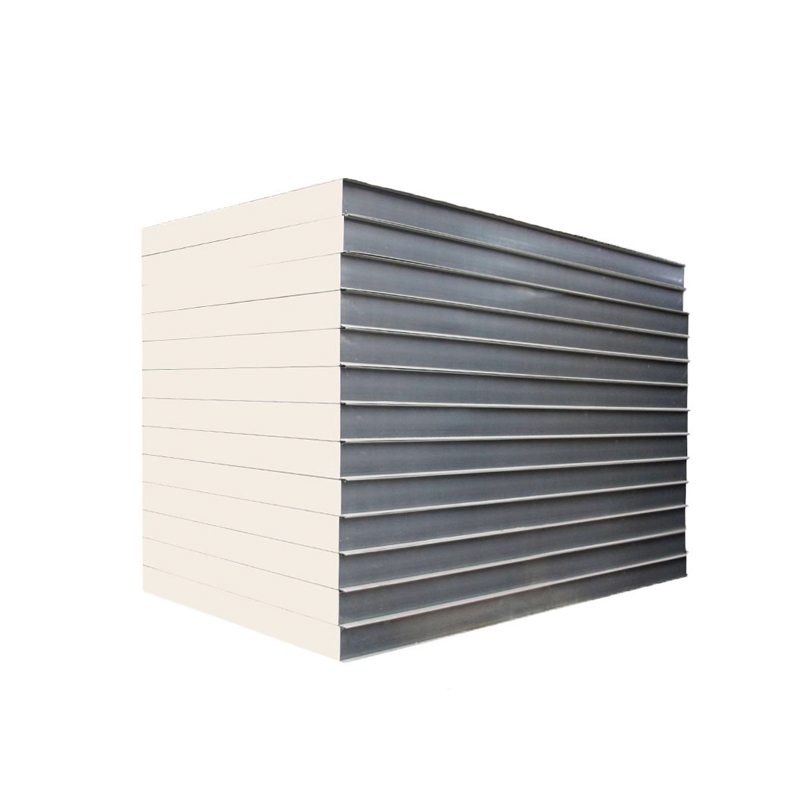
Fire safety compliance forms the unshakeable foundation of modern commercial construction and industrial facility planning. Strict building codes demand rigorous standards to protect lives and property. Architects and contractors must scrutinize every material choice carefully. Balancing thermal efficiency, structural integrity, and project economics often complicates these critical safety requirements. Many professionals struggle to decode the exact fire performance capabilities of Polyisocyanurate (PIR) panels. Navigating complex testing standards and compliance realities can feel overwhelming.
This article clarifies the actual fire performance of PIR panels in commercial construction. You will discover how these advanced materials react under extreme heat. We will explain what specific fire classifications actually mean for your daily operations. You will also learn how to make informed, safe, and highly economical decisions for your next building envelope.
Standard PIR panels typically achieve a B-s1, d0 (EN 13501-1) or B1 (DIN 4102-1) fire rating, classifying them as combustible but highly fire-retardant and self-extinguishing.
Under high heat, PIR materials undergo carbonization, forming a protective char layer that effectively blocks oxygen and slows flame spread.
Specifying fire-retardant B1-grade PIR panels significantly lowers insurance premiums and meets strict commercial building codes.
While Rockwool offers superior absolute non-combustibility (A1), PIR provides an unmatched balance of lightweight installation, top-tier insulation, and practical fire resistance.
Understanding fire ratings requires decoding specific European and international classification systems. We often hear the term "B1" used as a shorthand standard across the construction industry. This designation stems from the German DIN 4102-1 standard. It classifies building materials as "difficult to ignite." Many people confuse this rating with "non-combustible." Materials rated B1 will eventually burn under extreme, sustained heat. However, they stop burning and self-extinguish once you remove the direct flame source.
The modern European standard, EN 13501-1, provides a much deeper analysis of material behavior. Under this system, high-quality PIR achieves a B-s1, d0 classification. This matrix evaluates three critical behaviors during a fire event.
Classification Component | Code | Meaning in Real-World Scenarios |
|---|---|---|
Combustibility | B | Very limited contribution to fire. Hard to ignite and self-extinguishing. |
Smoke Emission | s1 | Minimal smoke production. Crucial for maintaining visibility during evacuation. |
Flaming Droplets | d0 | Zero flaming droplets. Prevents the fire from spreading to lower levels or secondary materials. |
Low smoke production (s1) directly saves lives. Dense smoke causes more fatalities in building fires than direct flames do. Zero flaming droplets (d0) act as a vital safety net. Melting plastics often drip fire onto floors or equipment. This dripping causes secondary fires and rapid structural spread. Standard PIR panels prevent this entirely.
Regulatory compliance heavily depends on these metrics. Cold storage facilities, logistics warehouses, and food processing plants face strict regulations. Local codes and insurance boards typically mandate B1 compliance as a strict baseline. High-risk zones simply cannot operate using materials below this safety threshold. Specifying Fire-retardant B1-grade PIR Panels guarantees you meet these mandatory baseline requirements seamlessly.
The secret behind PIR fire resistance lies in its molecular structure. Polyisocyanurate is a thermosetting plastic. This chemical makeup dictates how it reacts to intense thermal energy. Older Polyurethane (PUR) panels contain thermoplastic elements. PUR melts, bubbles, and fuels the fire when exposed to high heat. PIR behaves completely differently.
When exposed to direct flame, PIR undergoes a specific chemical process known as carbonization. The foam core does not liquefy. Instead, it transforms into a rigid, black carbon char layer. This process forms a protective barrier over the remaining unburned core.
Here is the exact step-by-step mechanism of PIR carbonization:
Initial Heat Exposure: The outer metal facing heats rapidly. The internal PIR foam begins to chemically degrade at the contact zone.
Char Formation: The heated surface turns into a dense, solid carbon crust.
Oxygen Starvation: This carbon crust seals the core away from atmospheric oxygen. Fire requires oxygen to burn.
Thermal Insulation: The char layer acts as a thermal shield. It drastically slows the transfer of heat deeper into the panel.
This carbonization mechanism actively prevents flashover. Flashover occurs when all combustible gases in a room ignite simultaneously. By starving the fire of oxygen and fuel, the PIR core delays structural failure. It contains the blaze to a localized area. This delay grants occupants crucial time to evacuate safely.
We must also distinguish between laboratory tests and real-world realities. Small-scale lab tests often isolate a small material sample. Real fire scenarios behave dynamically. Industry insurance tests, like FM Approvals (FM 4880), test complete room setups. They simulate full-scale fires. These tests prove how Fire-retardant B1-grade PIR Panels withstand intense corner-room blazes without contributing to flashover. Proper real-world data always outweighs isolated laboratory claims.
Choosing the right sandwich panel core dictates the success of your building envelope. Professionals generally choose between PUR, PIR, and Rockwool (mineral wool). Each material serves a distinct purpose. Understanding their trade-offs optimizes both safety and project economics.
PIR acts as an evolutionary step up from standard PUR. Manufacturers create PIR through a distinct chemical modification process. They increase the ratio of specific chemicals to create tighter, stronger molecular bonds. This formulation makes PIR significantly more fire-resistant than PUR. Many regions now phase out PUR entirely in favor of PIR for commercial applications.
The true debate usually lies between PIR and Rockwool. Mineral wool wins on pure absolute fire resistance. It achieves an A1 non-combustible rating. Rockwool panels can withstand direct fire for up to four hours. However, this extreme fire resistance demands significant compromises.
Performance Metric | PIR Panels (B1 Grade) | Rockwool Panels (A1 Grade) |
|---|---|---|
Fire Rating | B-s1, d0 (Combustible but retardant) | A1 (Fully non-combustible) |
Thermal Efficiency (Lambda) | Excellent (~0.022 W/mK) | Moderate (~0.040 W/mK) |
Required Thickness (for same U-value) | Thin (approx. 100mm) | Thick (approx. 180mm) |
Weight per Square Meter | Very Lightweight (~12-15 kg/m²) | Extremely Heavy (~25-30 kg/m²) |
PIR requires far less thickness to achieve the exact same thermal U-value as Rockwool. This thinner profile maximizes usable interior floor space. Furthermore, PIR is significantly lighter. Heavy Rockwool panels require robust steel frameworks and deeper foundations. These structural upgrades increase total construction costs dramatically.
You need a reliable decision framework. Specify Rockwool when absolute firewalls or hazardous chemical storage form your primary design driver. For standard logistics, food processing, or cold storage, PIR remains superior. Choosing Fire-retardant B1-grade PIR Panels optimizes your thermal performance. It maintains acceptable fire safety while slashing foundation and structural steel costs.
Smart buyers look far beyond basic material grades. While a B1 rating provides a solid foundation, elite commercial projects demand system-level certifications. Authorities evaluate the whole panel system, not just the foam core inside.
High-end certifications ensure the entire wall assembly resists fire intrusion. Look for EI30 or EI60 ratings. The "E" stands for Integrity, meaning the panel stops flames and gases from passing through. The "I" stands for Insulation, meaning it prevents dangerous heat transfer to the unexposed side. The number indicates the duration in minutes. FM 4880 represents another elite standard. Property insurers recognize FM Approvals globally as the benchmark for real-world fire safety.
Installation realities drastically alter theoretical fire ratings. A top-tier panel fails quickly if installed poorly. Fire ruthlessly exploits weaknesses in the building envelope.
Panel Joints: Interlocking joints must fit tightly. Loose joints allow flames to penetrate the core directly.
Sealants: Contractors must use approved intumescent fire sealants. Standard silicone burns away rapidly.
Fastening Methods: Concealed screws offer better aesthetics but require careful engineering to maintain fire integrity. Exposed fasteners must utilize robust metal washers to prevent early melting.
Standard Flashings: Metal flashings at corners and base tracks must seal the exposed foam completely.
Connecting these elements to your Total Cost of Ownership (TCO) drives smarter investments. The initial cost of B1 PIR panels provides substantial long-term returns. Their exceptional thermal resistance permanently reduces daily HVAC loads. The lightweight nature speeds up construction times, lowering labor bills. Most importantly, installing Fire-retardant B1-grade PIR Panels secures highly favorable property insurance assessments. Lower annual premiums often offset the initial material upgrade cost within just a few years.
Procuring reliable sandwich panels requires strict due diligence. The market features many manufacturers making bold safety claims. You must verify these claims through documented evidence and technical scrutiny.
First, always audit the documentation. Never accept glossy marketing brochures as proof of fire performance. Insist on a valid Declaration of Performance (DoP). Request comprehensive third-party laboratory test reports. Ensure certified European or international laboratories issued these documents. Look for recent test dates to guarantee current production compliance.
Second, investigate the core density and chemical formulation. The precise chemical index dictates the true fire retardancy. Manufacturers mix isocyanate and polyol to create the foam. A higher Iso/Polyol ratio generally improves fire resistance. However, a ratio pushed too high causes the panel to become brittle. Ask your supplier how they balance this formulation. Consistent foam density (usually around 40-42 kg/m³) ensures uniform strength and predictable fire behavior across the entire panel span.
Finally, check their approach to system testing. A common mistake involves accepting a certificate for the foam core alone. A bare piece of foam behaves differently than a completed wall assembly. Verify if the manufacturer guarantees the fire rating for the finished system. Do they provide specific installation guidelines to maintain that rating? Elite suppliers offer detailed manuals for joint designs, approved sealants, and exact fastening patterns.
By demanding transparent documentation and system-level proofs, you protect your project. You avoid inferior products masquerading as premium safety materials. Your due diligence ensures you receive the exact fire performance you pay for.
Fire-retardant B1-grade PIR panels represent the perfect sweet spot for modern commercial construction. They offer robust, reliable life safety without sacrificing crucial energy efficiency. By carbonizing under high heat rather than melting, these panels effectively slow down flame spread and allow vital evacuation time. Their lightweight profile and exceptional insulation capabilities directly lower structural costs and reduce long-term operational expenses.
To secure your facility effectively, take immediate action. Request specific product data sheets from your shortlisted manufacturers. Demand transparent, third-party fire test certificates verifying EN 13501-1 or FM Approvals compliance. Finally, conduct a localized Total Cost of Ownership analysis to calculate how the thermal savings and reduced insurance premiums will benefit your bottom line.
A: Yes. Specific panel thicknesses and engineered joint designs can achieve EI30 or EI60 certifications. These ratings measure integrity (E) and insulation (I) over time in minutes. Thicker panels and specialized interlocking joints help the assembly withstand fire penetration and heat transfer for up to an hour.
A: No. Unlike older thermoplastics such as EPS or standard PUR, PIR is a thermosetting plastic. When exposed to extreme heat, it chemically chars and hardens into a solid carbon layer. It does not melt, bubble, or produce dangerous flaming drips.
A: Yes. The metal facing serves as the primary thermal shield. The gauge of the steel and the specific profile design play crucial roles. Thicker metal facings maintain structural integrity longer. They protect the internal PIR foam core effectively during the initial, critical stages of a fire.
