
English 


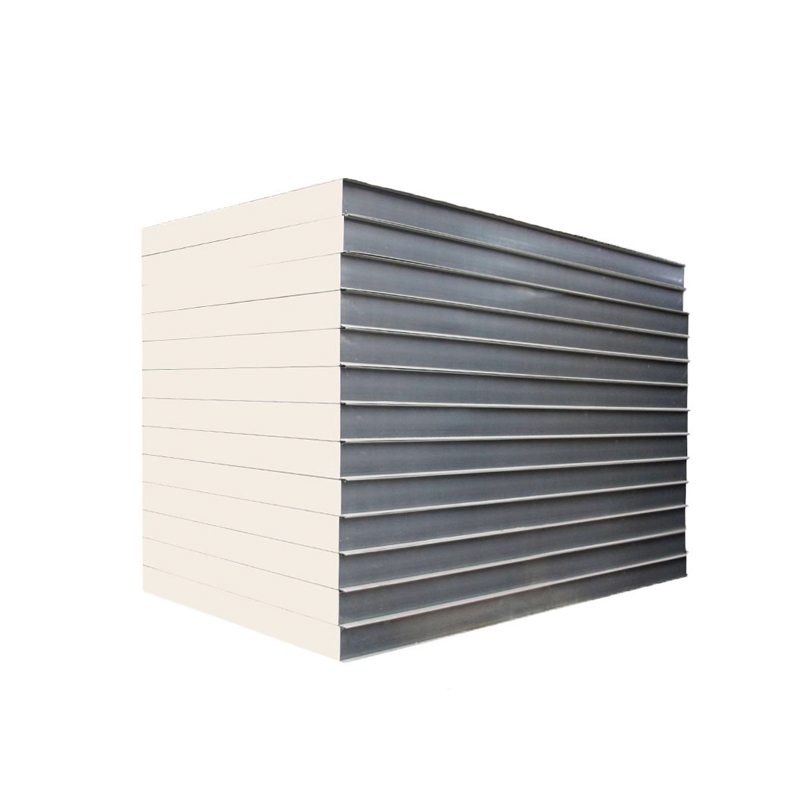
Polyisocyanurate (PIR) dominates the modern commercial insulation market. It offers ultra-low thermal conductivity, typically measuring around 0.022 W/m·K. This incredible efficiency provides a highly desirable space-saving profile. You can achieve strict energy targets using significantly thinner wall assemblies. Consequently, developers maximize usable floor space. However, commercial implementation reveals a more complex reality. While highly efficient, PIR carries specific structural, environmental, and compliance risks. Misapplying this rigid foam can quickly derail project timelines. Worse, it can massively inflate your Total Cost of Ownership (TCO) through premature failures or severe compliance violations. We designed this guide specifically for specifiers, architects, and facility managers. You need transparent, evidence-based data to make informed procurement choices. Below, we break down the exact limitations of PIR insulation. We also detail the strict evaluation criteria you must apply. By understanding these inherent flaws, you can prevent costly systemic failures in your next commercial build.
PIR chars rather than melts, but still poses fire risks and releases toxic smoke (hydrogen cyanide) under sustained exposure, necessitating strict height and code compliance.
The material’s inherent brittleness makes precision installation difficult; cutting errors create permanent thermal bridges.
Contrary to standard insulation logic, PIR’s thermal efficiency degrades significantly in extreme sub-zero environments (e.g., below -20°C).
Moisture ingress through damaged facings or delamination in SIPs can lead to irreversible structural degradation and heat loss.
Specifying high-quality Fire-retardant B1-grade PIR Panels and enforcing rigorous installation protocols are mandatory to mitigate these baseline risks.
PIR contains an isocyanurate ring. This chemical structure forces the material to char rather than melt. Many view this carbonization process as a major upgrade over older PUR foams. However, a dangerous misconception persists across the industry. PIR is not entirely fireproof. It remains a combustible material. It will actively burn under sustained flame exposure.
When it burns, it poses severe toxicity risks. The off-gassing hazard during combustion is incredibly high. The material releases dense, toxic black smoke. This smoke contains high concentrations of carbon monoxide. More alarmingly, it releases hydrogen cyanide. Inhaling these byproducts poses a far greater immediate risk to building occupants than the flames themselves. You cannot ignore this critical safety metric.
This reality dictates strict building code enforcement globally. Regulatory limits severely restrict its application in specific scenarios. For example, the UK strictly limits the use of combustible cladding on buildings above 18 meters. Germany enforces similar heavy restrictions for structures above 22 meters. Buyers must rigorously evaluate local fire safety regulations before procurement. You cannot afford simple compliance oversights.
To meet commercial insurance standards, you must elevate your procurement criteria. Standard grade panels often fail strict audits. Sourcing certified Fire-retardant B1-grade PIR Panels is an absolute necessity. The "B1" designation indicates the material is difficult to ignite. This specific upgrade mitigates baseline fire risks. It also satisfies stringent local compliance codes and satisfies cautious insurance underwriters.
Installation crews often struggle handling rigid PIR boards on active sites. The physical rigidity creates major logistical challenges. The foam is notoriously brittle. In cold weather, it becomes highly prone to snapping under minimal pressure. Cutting the boards generates a fine, highly irritating dust. Installers must wear proper respiratory PPE. They must also manage site cleanup rigorously.
Furthermore, PIR suffers from a distinct "zero-margin" cutting flaw. Flexible mineral wool easily compresses to fill awkward cavity gaps. PIR does not compress at all. If a contractor makes an inaccurate cut, they cannot simply splice it together. This error creates a permanent void in the insulation layer. These resulting voids cause a phenomenon known as "thermal bypass." Convective air currents rush through the unsealed gap. This effect can increase localized heat loss by up to five times. It entirely negates the board's high R-value.
Finally, you must consider the core-to-facing separation risk. Industry professionals call this delamination. Structural Insulated Panels (SIPs) frequently face this hidden threat. Fluctuating seasonal temperatures and humidity ingress stress the panel continually. Aging chemical adhesives eventually fail under this stress. Once the core separates from the rigid protective facing, the entire wall assembly loses critical structural integrity. It can lead to severe bowing or localized collapse.
Forcing oversized rigid panels into tight timber cavities, causing unseen hairline fractures.
Failing to apply aluminum tape over cut edges, exposing the vulnerable core to moisture.
Ignoring proper mechanical fixings, relying purely on friction fits.
We often overlook a critical technical flaw regarding ambient temperature. Most insulation materials perform better as temperatures drop. PIR breaks this fundamental thermodynamic rule. This temperature variable catches many HVAC engineers off guard during the modeling phase.
The thermal resistance of PIR begins to noticeably deteriorate when ambient temperatures fall below 15°C. As conditions worsen, the performance curve drops further. At a -20°C threshold, the material experiences a sharp drop-off in overall thermal efficiency. Why does this happen? The trapped blowing agents (often pentane gas) inside the closed-cell structure begin to condense. This gas condensation severely reduces the panel's insulating power.
You must avoid severe application mismatches. Never specify standard PIR for deep-freeze cold storage facilities. Extreme cold climates also demand extreme caution. Unless you heavily over-engineer the panel thickness, standard boards will fail your energy efficiency models. For extreme cold-chain logistics, consider alternative insulation cores. Rigid Polyurethane Foam (RPUF) or Expanded Polystyrene (EPS) often prove more cost-effective. They remain far more reliable in extreme sub-zero environments.
Ambient Temperature | PIR Thermal Performance Trend | Standard Material Behavior (e.g., Mineral Wool) |
|---|---|---|
+20°C | Optimal (Peak R-Value Achieved) | Normal Baseline Performance |
+15°C | Mild Efficiency Decline Begins | R-Value Marginally Improves |
0°C | Noticeable Efficiency Loss | R-Value Continues to Improve |
-20°C | Sharp Drop-off (Internal Gas Condensation) | Stable / Highly Optimal Performance |
PIR features an inherently closed-cell structure. Intact boards boast a water absorption rate typically below 5%. However, it remains highly sensitive to moisture upon physical breach. The external aluminum foil facing is surprisingly delicate. Puncture damage during transit or rough installation spells disaster. Breached facings allow moisture ingress directly into the inner core. This degrades the stated R-value permanently. Trapped internal water also fosters hidden mold growth behind expensive wall finishes.
Next, we must examine the environmental footprint. Sustainability presents a massive project trade-off. PIR production relies heavily on petrochemicals like MDI. This results in a substantial embodied carbon footprint. Producing just one cubic meter generates roughly 35 to 50 kg of CO₂e. Furthermore, demolition contractors find the material notoriously difficult to recycle. Because it is a thermosetting plastic, it cannot simply be melted down. At the end of its typical 50-year lifecycle, most panels inevitably enter local landfills.
Finally, consider crucial indoor health metrics. Long-term off-gassing remains a known environmental risk. Boards can release volatile organic compounds (VOCs) and formaldehyde traces over time. You must evaluate this carefully for commercial projects pursuing strict green building certifications. Standard bodies governing LEED, BREEAM, and WELL impose heavy point penalties for high VOC emissions.
You must carefully weigh the Total Cost of Ownership (TCO). Yes, distinct disadvantages exist. But PIR also offers incredible labor savings on site. The material is exceptionally lightweight. It boasts a core density of 30 to 40 kg/m³. Compare this directly to traditional Rockwool, which weighs 100 to 150 kg/m³. A lighter board means significantly faster manual installation. It lowers the overall structural dead load. It also offers a far superior footprint-to-R-value ratio.
To streamline your procurement and shortlisting logic, follow these specific guidelines:
Do NOT use: Avoid PIR for high-rise facades exceeding local fire codes. Skip it for highly irregular cavity shapes where complex cutting errors multiply quickly. Never use it in deep blast-freezers operating consistently below -20°C.
DO use: Specify it confidently for low-slope commercial roofing. Use it for space-restricted interior wall retrofits where floor space equals revenue. It also shines brilliantly in high-performance modular construction.
You need a rigid risk mitigation checklist. Follow this step-by-step buyer action plan to ensure long-term project success.
Verify all BBA, UKCA, or local equivalent certifications before authorizing a purchase order.
Insist on continuous aluminum foil taping across all joints. This creates an unbreakable, continuous vapor barrier.
Specify certified Fire-retardant B1-grade PIR Panels to strictly limit potential flame spread.
Utilize high-density hybrid boards featuring tough cement or ceramic outer facings in known heavy-impact zones.
Project Requirement | Primary Material Recommendation | Key Evaluation Consideration |
|---|---|---|
High-Rise Facade (>18m/22m) | Mineral Wool / Non-Combustible | Strict fire code compliance required by law. |
Interior Wall Retrofit | B1-Grade PIR | Maximizes limited floor space due to thin profile. |
Deep Blast Freezer (-20°C+) | RPUF or High-Density EPS | PIR loses thermal efficiency due to gas condensation. |
Commercial Flat Roofing | B1-Grade PIR | Lightweight nature significantly reduces structural load. |
In conclusion, PIR is not a universal silver bullet. Its undeniable thermal dominance comes packaged with strict installation tolerances. Fire-safety nuances further complicate its commercial application. You must approach large-scale procurement critically. We strongly advise buyers to conduct a full, independent lifecycle assessment. Always consult your project's structural engineer regarding specific wind-load and delamination risks. Do not rely solely on sales brochures. Finally, demand absolute transparency from your manufacturing suppliers. Request certified, third-party fire-test data before committing to bulk orders. Informed specification prevents incredibly expensive post-construction remediation.
A: Yes, minimal shrinkage can occur. This issue relates to thermal drift and dimensional stability. Poor manufacturing processes or exposing the panels to extreme temperature fluctuations exacerbate it. Using properly aged, high-quality boards minimizes this risk.
A: The foam itself absorbs very little water. However, if the protective foil facing tears, moisture enters the core. Trapped water causes permanent R-value degradation and provides a breeding ground for hidden mold. You must replace heavily saturated panels.
A: Yes. PIR contains an isocyanurate ring that triggers a charring mechanism. It carbonizes rather than melting like older PUR foams. It also emits less smoke. However, you must remember neither material is entirely non-combustible.
A: Rodents do not eat the foam for nutritional value. However, mice easily tunnel through the brittle, rigid structure to build warm nests. If installing in pest-prone areas, you must utilize proper mechanical pest barriers.
