
English 


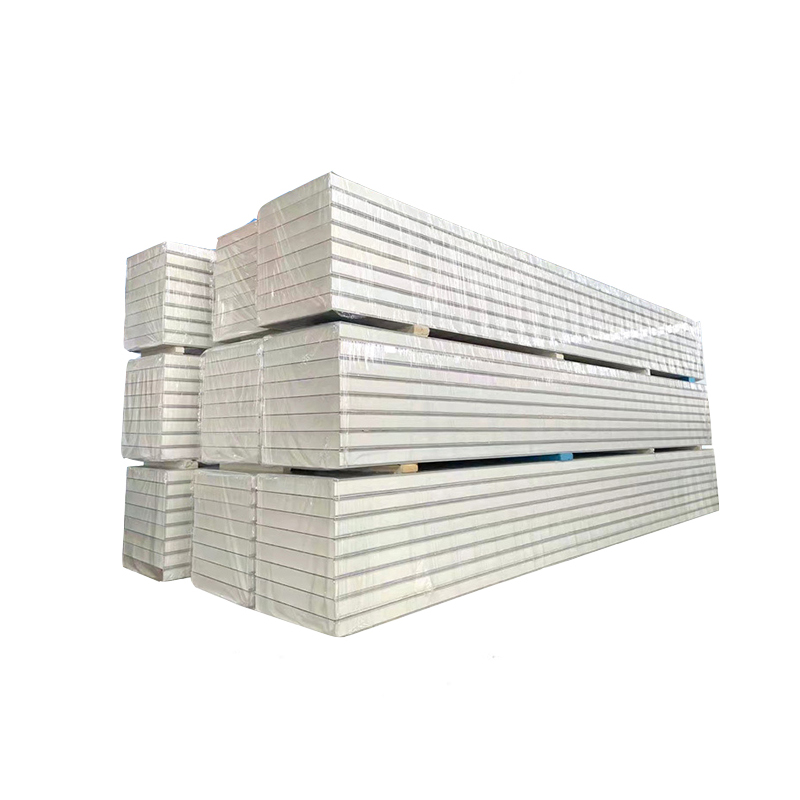
For industrial and commercial construction, specifying exterior walls and roofs is a delicate balancing act. You must constantly weigh strict fire safety compliance against structural weight limitations and thermal efficiency requirements. Meeting standards like Euroclass or ASTM is non-negotiable, yet achieving these standards often complicates architectural designs.
Unfortunately, fire ratings are frequently misunderstood across the industry. Confusing nomenclature involving letters like E, I, W, S, and D obscures true performance metrics. Furthermore, exaggerated manufacturer claims regarding core combustibility make it difficult to evaluate materials objectively. This confusion often leads to costly specification errors.
This guide strips away marketing fluff to decode sandwich panel fire ratings. We objectively compare core materials to help specifiers evaluate real-world performance and ROI. By the end, you will understand how a Fireproof PIR Building Sandwich Panel stacks up against traditional PU and Rockwool alternatives, empowering you to make safer, more cost-effective design decisions.
Fire Ratings are Multi-Dimensional: True fire resistance is measured not just by material flammability, but by integrity (E), insulation (I), smoke (s), and droplets (d).
Core Material Dictates Baselines: Rockwool offers maximum non-combustibility (Class A), while high-grade PIR provides the optimal balance of high fire resistance (up to EI60) and superior thermal insulation. Standard PU is largely phased out of strict fire-code projects.
System Over Material: A panel's actual fire rating depends heavily on implementation factors like material span, thickness, and joint design (e.g., blind joints vs. exposed fasteners).
Specifiers frequently confuse "reaction to fire" and "fire resistance." This misunderstanding creates serious compliance risks. Reaction to fire measures material combustibility. It tells you how a material contributes to a fire's growth. Fire resistance measures containment time. It tells you how long a wall system stops a fire from breaching a zone. Clear definitions prevent costly compliance failures during building inspections.
The Euroclass system provides a standardized framework for evaluating how materials react to fire. It categorizes performance across three distinct dimensions. Understanding these dimensions helps you select appropriate panel facing and core combinations.
Flammability (A-F): This ranks materials from Class A (Non-combustible) down to Class F (Highly flammable). Most modern commercial panels aim for Class B or higher.
Smoke Development (s1-s3): This measures visual obscuration during a fire. It ranges from s1 (minimal smoke) to s3 (heavy smoke emissions).
Flaming Droplets (d0-d2): This evaluates the risk of fire spreading downward. It ranges from d0 (no flaming droplets) to d2 (continuous burning droplets).
Euroclass Metric | Best Performance | Worst Performance | Implication for Life Safety |
|---|---|---|---|
Flammability (A-F) | A1 / A2 | E / F | Determines if the wall fuels the fire. |
Smoke (s1-s3) | s1 | s3 | Impacts visibility for safe evacuation. |
Droplets (d0-d2) | d0 | d2 | Prevents secondary fires on lower floors. |
Building codes heavily emphasize time-based resistance. These metrics dictate evacuation timelines and structural survival rates. They are expressed in minutes.
E (Integrity): This rating indicates how many minutes the panel stops flames and hot gases from passing through structural cracks.
I (Insulation): This rating shows how many minutes the panel prevents the non-fire side from reaching dangerously high temperatures.
W (Radiation): This metric defines how long the panel stops heat radiation from igniting objects on the safe side.
Example Application: When an architect specifies an "EI30" rating, the panel must block both flames (Integrity) and extreme heat transfer (Insulation) for exactly 30 minutes. An "EW60" panel provides 60 minutes of integrity and radiation control. These minutes give occupants critical time to evacuate safely.
Manufacturers do not assign these ratings arbitrarily. Panels undergo rigorous testing frameworks to prove their capabilities. Laboratory evaluations generally rest on four distinct pillars.
Flame Spread: Evaluated using methods like ASTM E162. Technicians expose panels to radiant heat sources to measure surface burning characteristics.
Smoke Accumulation: Laboratories measure optical density. They track how quickly smoke reduces room visibility.
Flame Penetration: Technicians subject panel joints and surfaces to localized, high-intensity flame impact.
Full-Scale Load-Bearing Room Tests: Standards like ISO 13784-1 simulate entire rooms. Technicians build a test structure, introduce massive fuel loads, and monitor time-to-collapse under real structural stress.
Common Mistake: Specifiers sometimes accept small-scale material tests as proof of full-system performance. Always demand full-scale room test certifications (like ISO or FM Approvals) when verifying fire resistance.
Selecting the right core technology requires an objective look at three dominant solutions. Each material presents distinct trade-offs between thermal efficiency, weight, and fire safety. Understanding these trade-offs ensures project success.
Standard Polyurethane (PU) panels dominate budget-conscious projects. However, pure PU requires careful evaluation. The industry divides PU based on its Oxygen Index (OI). The OI indicates the minimum oxygen percentage required to sustain combustion.
B3-rated PU (OI ≥ 26) is highly flammable. It burns rapidly and produces toxic smoke. B1-rated PU (OI ≥ 30) performs better. It extinguishes itself when technicians remove the external flame. Despite this, standard PU remains generally insufficient for high-risk zones. Strict fire codes often phase it out entirely unless manufacturers hybridize it. For example, some manufacturers use PU edge-sealed rock wool to blend thermal performance and fire safety.
Rockwool stands as the ultimate benchmark for non-combustibility. Manufactured from spun volcanic rock, it easily achieves Euroclass A2-s1, d0 ratings. High-density Rockwool panels can provide over three hours of uncompromising fire resistance.
However, this safety comes with a significant trade-off. Rockwool has relatively high thermal conductivity. To achieve required insulation values, manufacturers must produce much thicker panels. Thicker panels drastically increase overall wall weight. Consequently, engineers must design heavier, more expensive structural steel framing to support them. Freight and lifting costs also rise exponentially.
Polyisocyanurate (PIR) answers the market demand for a balanced solution. PIR modifies standard polyurethane chemical structures to vastly improve thermal stability. It offers the insulation benefits of foam alongside impressive fire containment capabilities.
A well-engineered Fireproof PIR Building Sandwich Panel typically achieves a B-s1, d0 Euroclass rating. Depending on panel thickness and joint design, these panels easily resist fire for 1 to 2 hours. They represent the optimal choice for commercial projects needing strong thermal efficiency without sacrificing life safety.
Core Material Comparative Summary
Core Material | Fire Rating Capability | Thermal Efficiency (U-Value) | Structural Weight |
|---|---|---|---|
Standard PU | Low (up to B1) | Excellent | Very Light |
Rockwool | Exceptional (A-Class) | Moderate (Requires Thickness) | Very Heavy |
High-Grade PIR | High (B-s1, d0 / EI60) | Exceptional | Light |
How does a foam-based material resist extreme heat? The answer lies in specialized chemistry. PIR achieves remarkable fire resistance without relying on heavy stone fibers. We can evaluate this performance by observing specific high-temperature behaviors.
The secret to PIR's success is its charring mechanism. Standard PU melts and drips when exposed to extreme fire. PIR reacts entirely differently. When temperatures exceed 300°C, the foam core does not melt away. Instead, it undergoes a chemical change. The surface forms a stable, semi-carbonized protective layer known as "char."
This char layer acts as a physical barrier. It aggressively insulates the deeper, unburned core from the heat source. Simultaneously, it blocks oxygen from penetrating the panel interior. Without oxygen, the underlying foam cannot burn. This self-protecting mechanism delays structural failure significantly.
Realistic laboratory observations confirm this resilience. Technicians often subject PIR panels to 1000°C furnace environments. Even under these extreme conditions, a high percentage of the panel structure remains intact. The internal charring halts flame spread entirely. While the metal face may warp, the panel refuses to act as a fuel source. It contains the hazard rather than expanding it.
Smoke toxicity often poses a greater threat to human life than flames. Legacy B3 PU panels release heavy, toxic black smoke during combustion. Conversely, high-grade PIR features a low-toxicity smoke profile. The chemical cross-linking within PIR significantly reduces hazardous gas emissions. Earning an "s1" smoke rating ensures evacuation routes remain visible and breathable during critical emergency windows.
Best Practice: Always request third-party smoke toxicity reports when evaluating foam panels for indoor human-occupied facilities.
Selecting an excellent core material represents only half the battle. A superior panel core alone does not guarantee a building's final fire rating. Implementation considerations and physical installation risks dictate actual field performance.
Fire certificates are intrinsically tied to structural span limits. A manufacturer might advertise an EI30 rating. However, they achieved that rating using a specific distance between steel supports. Pushing a panel beyond its tested span voids the fire rating immediately.
If fire tests utilize a 3-meter span, installing those panels across a 6-meter span guarantees early failure. The panels will deflect, warp, and separate under heat stress far sooner than certified. You must verify span tables meticulously against your project's structural design.
Panel joints represent the weakest link during a fire. Flame and hot gases seek out structural seams. Consequently, joint engineering determines overall integrity.
Exposed Fasteners vs. Blind Joints: Traditional panels use exposed screws. Heat transfers quickly through these metal screws, compromising the core. Modern panels utilize blind joints. These screwless locking mechanisms hide fasteners within the seam itself.
Interlocking Seams: Complex interlocking joints maintain excellent wind and water tightness. More importantly, they create a labyrinth-like path. This complex geometry prevents direct flame penetration at structural seams, preserving the 'E' (Integrity) rating.
We often focus entirely on the core. Yet, the metal facing plays a crucial protective role. The thickness and profile of the steel cladding directly delay initial core exposure. A thicker steel face takes longer to heat up and warp. This delay prevents early structural collapse during a sudden fire event. Specifying a thicker gauge steel outer skin dramatically improves overall system resilience.
Architects and developers must justify every specification financially. Why should you specify a Fireproof PIR Building Sandwich Panel over a cheaper standard PU panel? Why not simply choose a highly-rated Rockwool option for absolute safety? The answer lies in total cost of ownership (TCO).
Cost calculations extend far beyond the panel's purchase price. To achieve identical thermal insulation (U-value) targets, a Rockwool panel must be significantly thicker than a PIR panel. This thickness drives a cascade of secondary costs.
Thicker Rockwool creates much heavier panels. Heavy panels demand heavier, more expensive secondary steel framing to support the facade. Furthermore, heavy panels increase freight expenses and require specialized lifting equipment on-site. PIR offers exceptional thermal insulation in a much thinner, lighter profile. This saves immense capital on structural steel framing and speeds up installation timelines.
Initial material costs only tell part of the financial story. Utilizing FM-approved or highly rated PIR panels can significantly lower facility insurance premiums. Insurance underwriters evaluate building fire risks rigorously. A facility clad in verified EI60 PIR panels secures much better coverage rates than one using legacy B2 PU foam. Over a five-year period, these premium reductions frequently offset the initial material price difference entirely.
Long-term performance dictates true ROI. Fibrous panels like Rockwool can absorb moisture if vapor barriers fail. Wet Rockwool loses its insulation value and sags under its own weight. Conversely, PIR utilizes a closed-cell foam structure. It actively prevents moisture absorption. This closed-cell nature ensures both insulation values and structural integrity do not degrade over decades. Your building performs exactly the same in year twenty as it did on day one.
Specifying exterior walls requires a clear understanding of the decision matrix. Fire ratings go far beyond simple flammability. They encompass structural integrity, smoke development, and rigorous system-level testing. If a facility stores extremely hazardous materials, you must specify Rockwool to guarantee absolute non-combustibility (Class A1).
However, most projects demand a different balance. If your goal is a highly regulated commercial facility requiring excellent thermal efficiency, verified EI30-EI60 ratings, and optimized construction costs, a Fireproof PIR Building Sandwich Panel emerges as the engineered choice. It provides exceptional life safety through char-forming technology while keeping structural steel costs low.
As a next step, actively request specific test certificates from manufacturers. Verify allowable spans against your local wind and fire loads. Finally, consult closely with a structural engineer regarding joint detailing and fastener placement to ensure your installed system matches the laboratory results.
A: No. Pure PU is inherently combustible (maxing out at B1 under strict oxygen index controls). Achieving an A-rating requires a non-combustible core like Rockwool (or PU edge-sealed rock wool composites).
A: It is the highest rating for combustible materials. 'B' means very limited contribution to fire, 's1' means minimal smoke production, and 'd0' means zero flaming droplets that could spread the fire below.
A: Yes. Ratings (like EI30) are tested as complete systems. Improper screw placement, inadequate joint sealing, or exceeding the maximum tested span will compromise the panel's ability to resist fire penetration in real-world scenarios.
