



Wood-Plastic Composite (WPC) often receives high praise as a modern, zero-maintenance miracle material. Manufacturers heavily market it for commercial and residential applications alike. However, enterprise buyers and contractors must understand its physical and commercial limitations before specifying it at scale.
Failing to account for specific material drawbacks leads to costly installation failures and immediate budget overruns. Hidden variables like heavy material weight, rapid thermal movement, and high upfront costs routinely disrupt project timelines. These neglected factors create misaligned performance expectations between architects, clients, and installers.
We will strip away the marketing hype to provide an objective, evidence-based analysis of these limitations. You will learn exactly how these disadvantages influence the evaluation and deployment of a Waterproof WPC Wall Panel. This comprehensive guide ensures you make informed, financially sound decisions for your next architectural project.
Higher Upfront CapEx: WPC requires a higher initial investment compared to traditional PVC or raw timber, shifting the financial justification strictly to long-term TCO (Total Cost of Ownership).
Significant Material Weight: The density of the composite increases shipping costs, requires robust substructures, and demands higher labor effort during installation.
Thermal Expansion Dynamics: WPC responds to temperature fluctuations; improper installation without expansion gaps will cause buckling or warping.
Non-Structural Application: WPC is purely a decorative and protective cladding; it cannot bear structural loads.
Building expert trust requires direct and transparent acknowledgment of material limitations. While WPC solves many traditional cladding problems, it introduces new engineering and financial challenges. Project managers must evaluate these four primary drawbacks carefully.
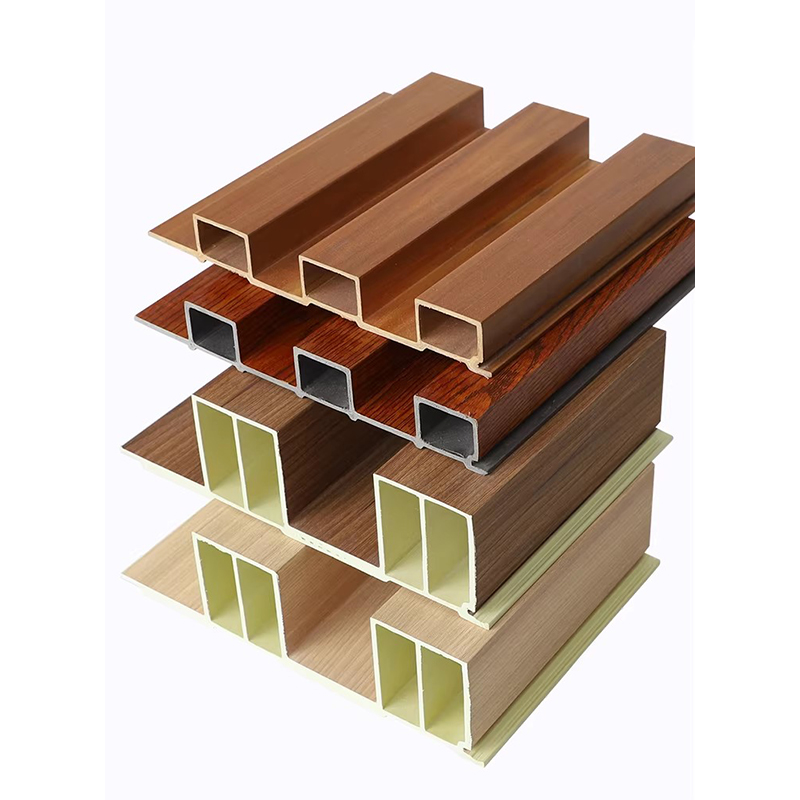
The manufacturing complexity of WPC drives its high purchase price. Production requires advanced co-extrusion technology. Factories must blend organic wood fibers and thermoplastic resins under precise thermal calibration. This complex process demands expensive machinery and strict quality control measures. Compare this to simple PVC extrusion. PVC requires fewer raw material inputs and simpler processing.
Consequently, the premium pricing makes WPC unsuitable for temporary builds. Strict low-budget projects often cannot absorb the initial cost shock. Procurement teams must secure larger upfront budgets before approval. This initial capital expenditure often deters cost-sensitive residential developers.
WPC features an incredibly high-density core. The composite blending process packs materials tightly together. This increases the total physical mass significantly compared to pure plastics. The resulting weight creates a severe ripple effect across site logistics.
Freight costs climb quickly because shipping containers hit weight limits before volume limits. On-site handling requires stronger lifting equipment and reinforced scaffolding. Installers often need two-man crews to maneuver a single panel safely. Labor costs rise accordingly as workers fatigue faster during vertical installations.
The plastic component within WPC reacts aggressively to extreme temperature variations. The material possesses a high coefficient of thermal expansion. It expands noticeably in high heat. It contracts sharply in cold environments. We must frame this characteristic as a strict installation liability.
Failing to respect these physics leads to critical system failures. If installers fail to acclimate panels properly, the boards will shift post-installation. Leaving inadequate expansion gaps guarantees severe warping or buckling. The resulting aesthetic damage requires complete material replacement.
Despite its immense physical density, WPC cannot support structural loads. The composite blend lacks necessary shear strength. It behaves purely as a decorative and protective cladding layer. You cannot use it to replace load-bearing timber or steel components.
Contractors must apply WPC over existing structural framing. Solid, pre-engineered substrates remain entirely mandatory. You cannot mount heavy fixtures, floating shelves, or commercial displays directly onto the panels. The underlying framing must bear all external weights.
General material disadvantages mean little without proper context. We must examine how these general WPC flaws apply specifically to wall cladding systems. Understanding these nuances helps architects specify materials correctly.
Weight directly dictates wall preparation strategies. Because a Waterproof WPC Wall Panel is surprisingly heavy, the underlying wall battens must be structurally sound. Installers cannot glue these panels directly to weak or damaged drywall. The paper face will simply tear under the continuous shear load. Metal or heavy timber furring strips become mandatory for secure mechanical fastening.
Location dictates the severity of thermal risks. Inside climate-controlled environments, thermal expansion remains practically negligible. HVAC systems keep ambient temperatures consistent year-round. Unconditioned spaces present entirely different challenges. High-sun exposure areas demand rigid adherence to strict installation tolerances. Installers must calculate and leave precise expansion gaps based on maximum local temperature swings.
Marketing brochures often oversimplify water resistance. While the panel core itself remains impervious to water, the joints and edges do not form a magically sealed barrier. Poor installation in aggressive wet zones creates massive liabilities. Commercial washrooms require exact detailing.
If installers ignore proper vapor barriers, water can penetrate the seams. This traps hidden moisture directly behind the cladding. Substrate rot and hidden mold colonies will develop rapidly. The panel survives, but the wall behind it rots away.
Interior designers often raise the "plastic sheen" objection. Budget WPC panels can look highly artificial compared to natural timber veneers. They often display repetitive grain patterns. High-end panels solve this through deep 3D embossing and random grain wrapping. However, achieving genuine aesthetic uniformity requires purchasing premium product tiers. Buyers must physically evaluate samples under actual site lighting conditions.
Enterprise decisions require a robust financial framework. We must shift the conversation away from raw purchase price. Evaluating the Total Cost of Ownership (TCO) provides a clearer financial picture.
WPC inherently loses on Day-1 purchase price. The material requires a substantially larger initial budget. However, it wins decisively on Year-5 maintenance calculations. Traditional materials demand constant upkeep. WPC requires zero chemical sealing. It needs no painting. It ignores termite and pest treatments entirely. This maintenance deficit bridges the initial cost gap quickly.
Project managers frequently debate between WPC and PVC. PVC costs significantly less upfront. It weighs much less, ensuring rapid, single-person installation. However, WPC offers drastically superior acoustic insulation. It provides higher impact resistance for heavy-traffic corridors. It is far less prone to brittle cracking under blunt force. Furthermore, it delivers a much more premium tactile feel for high-end interiors.
Natural wood demands cyclical Operating Expenses (Opex). Facility teams must waterproof wood regularly. They must apply expensive rot-prevention treatments. They must sand and re-stain sun-faded areas. WPC completely eliminates these recurring labor and material costs. The financial predictability of WPC appeals strongly to commercial property managers.
WPC remains financially viable only under specific conditions. The intended project lifecycle must exceed 3 to 5 years. It must operate in environments where traditional materials degrade quickly. High-moisture zones and high-traffic commercial corridors justify the premium. If the project is temporary, the ROI math fails.
Material Type | Initial CapEx | Handling Weight | Maintenance Opex | Impact Resistance |
|---|---|---|---|---|
Natural Wood | Moderate | Medium | Very High (Sealing/Staining) | Moderate (Dents easily) |
Standard PVC | Low | Light | Low (Wipe clean) | Low (Prone to cracking) |
WPC Panels | High | Heavy | Zero (Wipe clean only) | High (Dense core) |
Experienced contractors do not avoid WPC due to its drawbacks. Instead, they engineer around the disadvantages. Following strict mitigation strategies ensures flawless execution.
Acclimation is never optional. Installers must follow a strict 48-72 hour on-site acclimation rule. This vital step equalizes the material temperature with the installation environment. It prevents sudden post-install shrinking or expanding. To execute this properly:
Deliver the uninstalled panels to the specific room of application.
Open all packaging and separate the boards slightly.
Ensure the room's HVAC system is running at standard operational levels.
Wait a minimum of 48 hours before cutting the first panel.
You must mandate the use of specific engineered fastening systems. Avoid rigidly face-nailing the boards. Never glue the panels directly to a flat wall. Instead, use manufacturer-approved concealed clips. These proprietary clips allow the panel to float safely. It can expand and contract freely behind the scenes without buckling the visible surface.
Ensure proper airflow behind any Waterproof WPC Wall Panel installed in highly humid environments. Bathrooms and commercial kitchens generate intense steam. Proper furring strips create necessary ventilation cavities. This continuous airflow prevents hidden mold growth on the vulnerable drywall substrate behind the cladding.
WPC blunts standard saw blades much faster than natural wood. The dense plastic resins destroy cheap steel teeth quickly. You must specify the need for high-quality carbide-tipped blades. Carbide teeth ensure clean, un-melted cuts. Installers should cut the material slowly to reduce friction heat. Melted edges ruin seamless joint connections.
Buyers need an actionable evaluation matrix. This matrix helps qualify or disqualify the material based on specific project realities. Do not force WPC into environments where it fundamentally does not belong.
The project requires structural support or load-bearing spanning.
The procurement team faces a highly constrained upfront CapEx budget.
The architectural design requires continuous, seamless lengths over 20 feet without any visible expansion joints.
The installation team lacks the equipment to safely lift heavy materials.
The absolute priority is zero-maintenance waterproofing in damp environments.
The facility requires high impact resistance for busy commercial corridors or hotel lobbies.
The client demands long-term aesthetic stability without ongoing labor costs.
Acoustic dampening is a secondary project requirement.
Always subject shortlisted panels to strict vendor evaluation. Ensure the materials meet commercial fire-retardant standards. Look specifically for verifiable Class B or Class A fire ratings. Furthermore, check for low-VOC emission certifications. This is absolutely critical if used in interior, poorly ventilated spaces. Reputable vendors will provide these independent testing certificates immediately upon request.
The main drawbacks of WPC are its higher upfront cost and strict installation requirements. Its weight and thermal movement mean improper installation can easily lead to warping or buckling.
That said, when used in the right environment, waterproof WPC wall cladding offers strong long-term value through low maintenance, good impact resistance, and excellent moisture performance. For reliable product quality and professional project support, Green BIO can help buyers evaluate the right solution for their wall cladding needs.
A: Yes, basic WPC can experience slight color fading from prolonged UV exposure. Interior-grade panels are particularly susceptible to direct sunlight. However, premium exterior-grade WPC features a co-extruded UV-resistant capping. This protective shield significantly minimizes fading. Always specify UV-capped panels for sunlit environments.
A: The composite core itself does not absorb water or promote mold growth. However, organic debris collecting on the surface can harbor mold spores. If left uncleaned in damp environments, surface mold will develop. Regular wiping prevents this cosmetic issue entirely.
A: Yes, WPC is significantly heavier than traditional PVC. The dense wood fiber component increases its overall mass. This added density provides superior impact resistance and acoustic insulation. Consequently, it requires stronger fastening systems and more robust wall substructures during installation.
A: Installers do not need highly specialized proprietary tools. Standard woodworking equipment works perfectly well. However, the dense composite material dulls standard steel blades quickly. Installers must use high-quality carbide-tipped blades to ensure clean cuts. Strict adherence to expansion gap guidelines remains critical.
